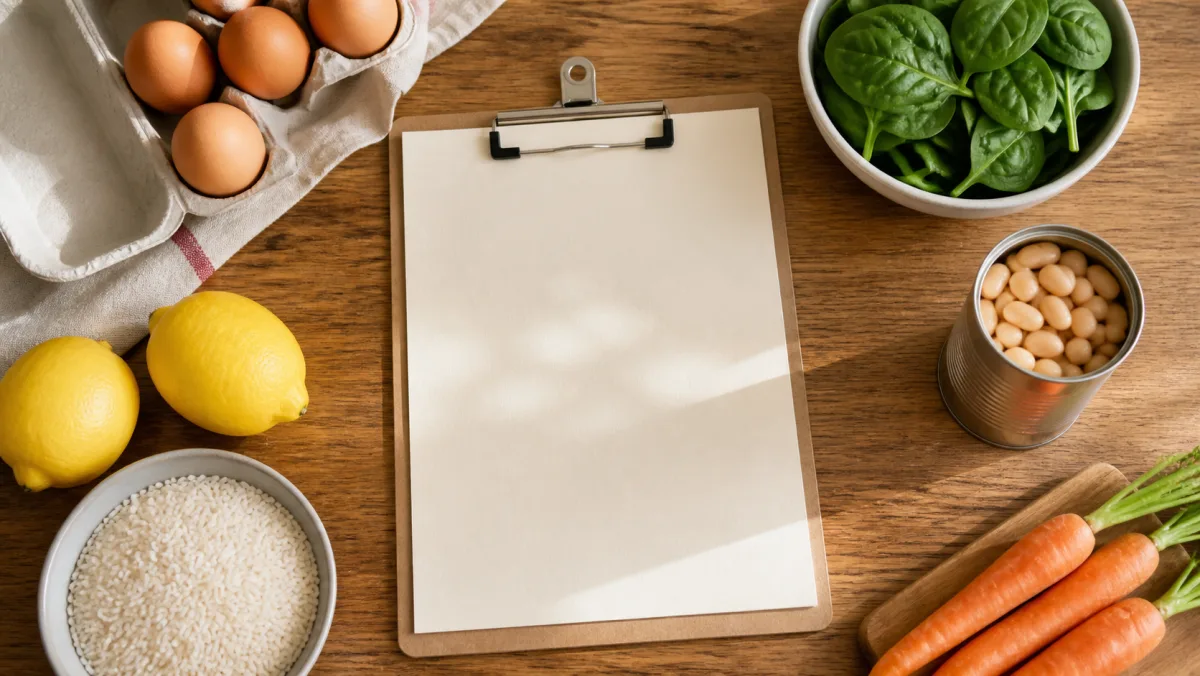
A weekly grocery list is supposed to make life easier. Yet it can quickly turn into a receipt for an imaginary version of your week: seven ambitious dinners, ingredients for every possible mood, and a fridge that still feels confusing on Thursday.
A useful weekly grocery list works in the opposite direction. It starts with what is already at home, makes room for plans to move, and buys a few believable options rather than a full script. You are not trying to predict every meal. You are making it easier to feed yourself when the day is done.
The USDA’s weekly meal-planning guidance suggests the same practical order: check your fridge, freezer and cupboards first, then write meals and a list that fit the time you actually have. Here is how to make that idea useful on a normal week.
Start with a use-first list, not a shopping app
Before adding a single item, spend three minutes looking through your kitchen. You are not doing a full inventory. You are looking for food with a job that is about to expire, open packets, and the useful basics you already own.
Write three short headings:
| Heading | What goes there | Example |
|---|---|---|
| Use first | food that needs attention soon | spinach, half a yogurt tub, cooked rice |
| Already have | basics that can start a meal | pasta, eggs, beans, frozen peas |
| Need to buy | the missing piece for a real dinner | lemons, tortillas, one fresh vegetable |
This step changes the list from a set of wishes into a plan you can act on. A jar of tomato sauce, a can of beans and a bag of rice are not random cupboard clutter. They are already most of a dinner. If the fridge looks like disconnected fragments, use the base, protein and fresh element method before you decide what to buy.
Choose five dinner options, not seven assigned nights
The most common grocery-list trap is buying for every day as if nothing will change. A late meeting, an invitation, a tired evening or leftovers can make a perfect calendar feel silly very quickly.
Instead, name five dinner options and give them a level of effort. Do not assign them to Monday through Friday yet.
| Type of night | What to have ready | Example option |
|---|---|---|
| Very low energy | almost no chopping or cleanup | eggs, toast and greens |
| Quick but cooked | one pan or one pot | pasta with peas, beans and pesto |
| Normal evening | a little time and attention | roasted vegetables with rice and a sauce |
| Use-it-up night | flexible ingredients that need using | fried rice, soup or a frittata |
| Backup night | a reliable option that keeps well | freezer meal, canned soup plus toast, or noodles |
This is not a meal plan in disguise. It is a set of doors. When Wednesday arrives, choose the door that fits Wednesday. Our flexible weeknight meal-plan method shows how to keep those options moving instead of treating a changed plan as failure.
Buy ingredients with two believable jobs
An ingredient deserves space on a weekly list when you can picture using it twice. Not in a hypothetical food-blog future, but in the actual week ahead.
- A bag of spinach can go into pasta, then eggs or soup.
- Tortillas can become wraps, then a quick quesadilla.
- A lemon can finish a grain bowl, then brighten beans on toast.
- A can of chickpeas can join a warm curry, then become a crunchy topping or a cold lunch.
- A pot of yogurt can be sauce for roasted vegetables, then breakfast or a dip.
This rule makes a smaller shop more flexible. It also protects you from buying an exciting ingredient that only belongs to one recipe. If your default cupboard needs a little more support, start with pantry staples for 15-minute dinners. Keep only the staples that really earn a second use in your kitchen.
Add quantities only where they prevent a problem
Vague lists cause two very different mistakes: buying too much fresh food, or arriving home without enough for the meal you had in mind. You do not need to weigh everything. You just need enough detail to make the next decision obvious.
Try this level of specificity:
- one bag of spinach for two dinners;
- six eggs for two easy meals and one emergency option;
- two peppers for the meal you will cook first;
- one loaf, sliced and frozen if you will not use it quickly;
- one jar of a sauce you already know how to use.
Notice that the quantity is connected to a use. “Vegetables” is not a plan. “Carrots for traybake, spinach for pasta” is. If you live alone, make the portions even more deliberate. The goal is not to make more leftovers, it is to give each extra ingredient a different next job, as in cooking for one without repetitive leftovers.
Moody says: your grocery list does not have to prove that you are organised. It only has to make dinner easier for the person who will be tired later.
Shop in store order, then leave space for one change
Once the dinner options are clear, sort the list by the way you move through your usual shop: produce, chilled food, cupboard items, freezer, household items. This is not glamorous, but it means you are less likely to circle back for the one thing you forgot.
Leave a small “swap” line at the end. Use it only when a regular item is unavailable, looks poor, or is suddenly too expensive. Give the swap a job, not a fixed identity:
| If you planned… | A practical swap could be… |
|---|---|
| spinach | frozen peas, kale or another leafy vegetable you enjoy |
| tortillas | bread, pitas or rice for the same filling |
| fresh fish or chicken | beans, eggs, tofu or a freezer option |
| one specific sauce | another sauce you already know how to use |
The purpose is to keep the dinner option alive without forcing yourself to hunt for a particular ingredient. A substitution is useful when it preserves the role in the meal, not when it copies the original recipe perfectly.
Keep a running list, but check it against the week
A running list on your phone or fridge is brilliant for genuine replacements: coffee, detergent, milk, eggs, a pantry item you have finished. Add those the moment you notice them. Then, before shopping, compare the running list with the dinner options.
This last check prevents the “we always buy it” effect. A new jar is only helpful if you will use it, and a favourite ingredient can wait if there are already two open versions at home. The point is not to ban spontaneous food or special treats. It is to make the everyday part of the basket less accidental.
Where MoodDish fits
Grocery shopping gets harder when dinner ideas are the missing piece. MoodDish can start with your mood or the ingredients you already have, then give you a direction before you write the list. Use that suggestion as a prompt, not a command: add the few things that would make it work, or choose another dinner that suits the week better.
Your list can be flexible and still be useful. In fact, it is useful because it expects the week to change.
Questions about a weekly grocery list
How many dinners should I shop for each week?
For many households, five dinner options plus a couple of backups is more realistic than shopping for seven fixed meals. Adjust for how often you eat out, cook extra portions or have evenings away from home.
What should always be on a weekly grocery list?
There is no universal list. Keep a few foods you genuinely use for low-effort dinners, plus fresh items with a clear first use. A small set of flexible cupboard and freezer backups can cover the nights when plans change.
How can I stop throwing away fresh food?
Buy it for a specific first meal and a second believable use. Put the most perishable food where you can see it, choose the use-it-up dinner early in the week, and freeze or repurpose extras before they become an obligation.
A good weekly grocery list is not a menu you have to obey. It is a quiet way to make sure your future self has something doable to cook.
Need dinner options that match the week you actually have? Explore MoodDish.