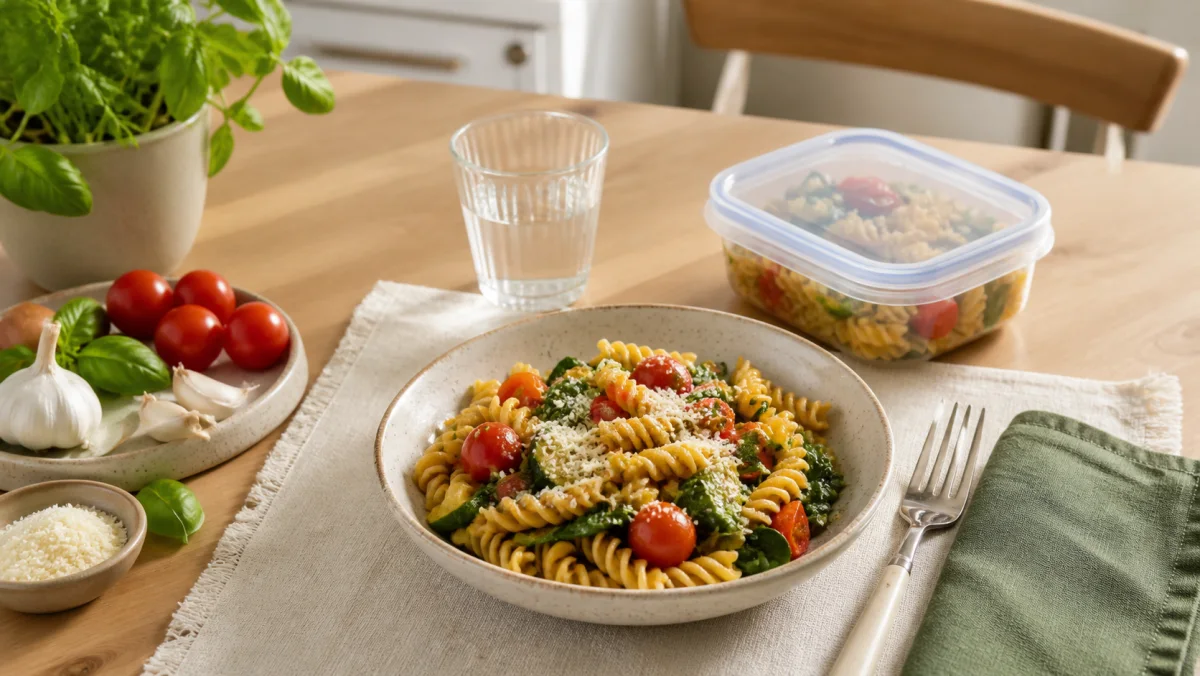
Cooking for one has a strange reputation. Either you are meant to live on toast, or spend Sunday filling seven identical containers with chicken and rice. Neither option makes dinner feel like something to look forward to.
The useful middle ground is to buy a few flexible ingredients, cook one proper portion when you want it, and make any extra work for a different meal later. You get the ease of a plan without the feeling that you are eating Monday’s dinner until Friday.
Stop planning meals, start planning building blocks
For one person, whole recipes can create awkward leftovers. A bag of spinach, a jar of sauce and a packet of pasta do not need to belong to one huge batch. They can become several meals with different finishes.
Start each shop with three anchors:
| Anchor | Good choices | What it solves |
|---|---|---|
| One quick protein | eggs, tofu, beans, chicken, tinned fish | makes a plate feel like dinner |
| One flexible carbohydrate | pasta, rice, potatoes, wraps, bread | gives you several directions |
| Two vegetables with different shelf lives | tomatoes and spinach, carrots and broccoli, peppers and frozen peas | one is for now, one is for later |
Add one flavour shortcut you genuinely like: pesto, curry paste, salsa, soy sauce, or a good jar of tomato sauce. That is enough structure for several dinners, without pretending you will cook a restaurant menu on a Tuesday night.
Make one portion on purpose
The easiest way to avoid boredom is to stop treating leftovers as the goal. Cook the amount you want tonight first. If an ingredient package forces you to make extra, decide its next job before it disappears behind the milk.
For example:
- Cook half a packet of pasta with tomatoes and spinach tonight. Save the remaining spinach for eggs on toast tomorrow.
- Roast a tray of vegetables, then use some in a warm grain bowl and the rest folded into a wrap.
- Open a tin of chickpeas for a curry, then crisp the remainder in a pan for a salad or soup topping.
This is different from making a giant casserole. The shared ingredient is doing the work, but the final plate still changes.
Give every extra serving a new identity
Sometimes you will make two portions, because it is practical. The trick is not calling tomorrow’s lunch a sad replay. Change one key element: temperature, sauce, texture or format.
| Tonight | Tomorrow’s different version |
|---|---|
| Tomato pasta | pasta frittata or cold pasta salad with lemon |
| Roasted vegetables and rice | crisp vegetable wrap with yogurt sauce |
| Chicken and potatoes | chopped chicken on a salad or in a sandwich |
| Bean stew | beans on toast with a fried egg |
You are not disguising food. You are giving yourself an easier starting point. If leftovers start to feel like a chore, reduce the batch next time. Cooking for one is allowed to be small.
Moody says: the best solo dinner is not the most impressive one. It is the one you are happy to make instead of scrolling delivery apps for twenty minutes.
Use the freezer as a pressure-release valve
The freezer is particularly helpful when recipes come in larger quantities than your appetite. Freeze one cooled portion early, labelled with what it is and the date. Do it while the food still looks inviting, not after it has sat in the fridge all week.
For refrigerated cooked leftovers, FoodSafety.gov lists three to four days at 4°C / 40°F or below for many cooked leftovers. When you are unsure how quickly you will eat a portion, freezing it gives you a clearer option than hoping it will still be there in time.
The same rule keeps shopping calmer: buy one item for this week and one frozen or cupboard back-up for the week when everything gets busy. A frozen soup, a bag of peas or a tin of beans is not a failure of planning. It is planning that knows life happens.
Build a tiny rotation instead of chasing novelty
You do not need a new cuisine every night. Pick three formats you like, then rotate the flavour:
- A bowl: rice or grains, vegetables, a protein, something punchy on top.
- A pan meal: pasta, noodles, eggs or potatoes with whatever needs using.
- A no-cook or low-cook fallback: toast, wraps, yogurt and fruit, or a good soup.
When you have energy, try a new recipe inside one of those formats. When you do not, repeat the format with a different sauce. The result is variety without asking yourself an enormous question at 7 p.m.
If the real problem is an almost-empty fridge, what to cook with what is left in the fridge starts with a similarly practical formula. And if you are tired rather than uninspired, keep fast, hot, comforting evening recipes in your back pocket.
Let the mood choose the finish
There is no rule that says a solo meal has to be efficient at the expense of comfort. A tired night might call for pasta with a jarred sauce and a handful of greens. A calm night might be the moment for a vegetable curry that gives you a portion for the freezer. Both count as cooking for yourself.
MoodDish can help at the decision stage: begin with how you feel or with ingredients you already have, then choose an idea that suits the evening. That makes the plan a support, not another thing to keep up with.
A five-minute check before you cook
- What needs using first?
- Do I want one portion, or one portion plus a future meal?
- What can change tomorrow so the extra does not feel repetitive?
- Is there one portion worth freezing now?
That is enough. Cooking for one gets easier when your food has a next step, but your week does not have to follow a script.
Need a dinner idea that fits your energy and your ingredients? Explore MoodDish.