
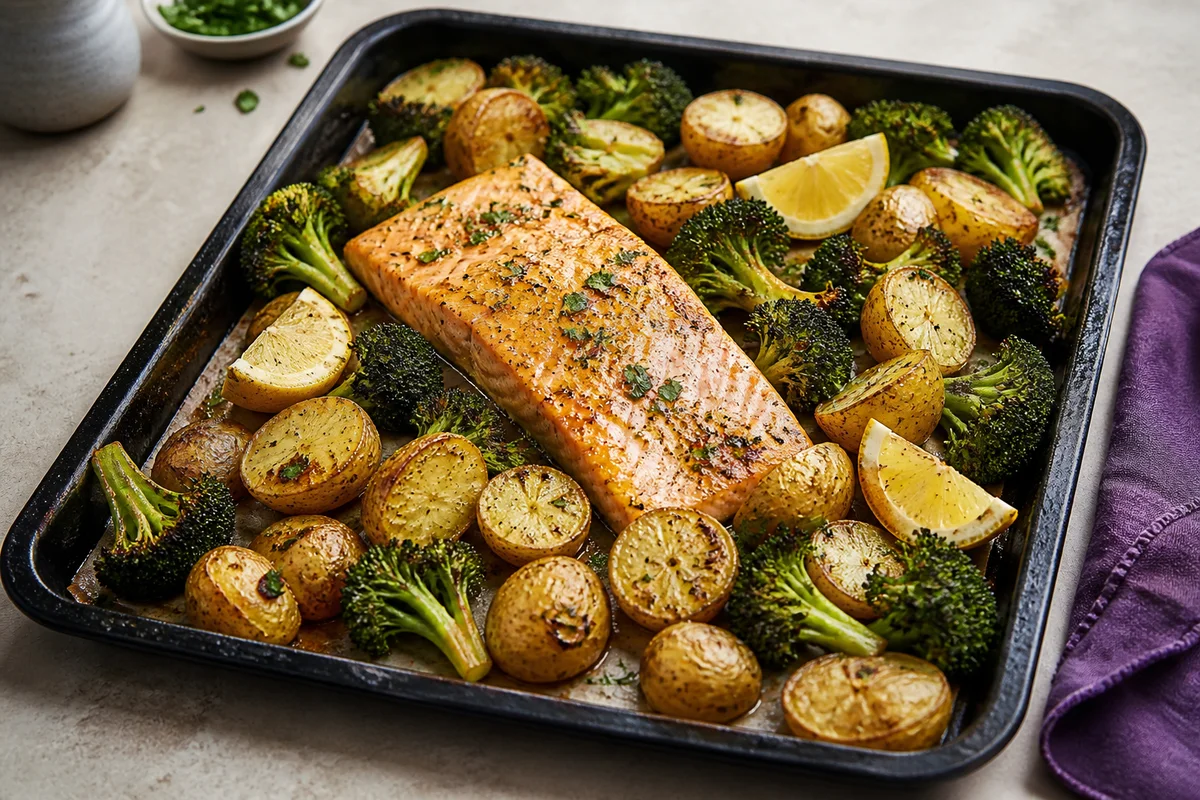
A sheet pan dinner is not magic, and it will not make every ingredient cook at exactly the same speed. What it can do is turn one tray, a hot oven and a few ordinary groceries into a real meal with almost no washing up. That is especially helpful on evenings when you want something warmer than a sandwich but do not want to manage three pans.
The easiest sheet pan dinners are built around timing, not a strict recipe. Start the ingredient that needs the longest cook first, add quick-cooking vegetables later, and finish with something bright or creamy after the tray comes out. Once you understand that rhythm, you can make dinner from salmon and potatoes, sausages and peppers, chickpeas and cauliflower, or the vegetables that need using up.
The simple formula for a sheet pan that works
Most successful trays have three jobs: a filling centre, a vegetable, and something that makes the finished meal feel complete. You can add a carbohydrate to the tray, or serve bread, couscous or a pouch of rice alongside. The goal is not to make every component identical. A little contrast is what keeps one-pan food from tasting flat.
| Part of the dinner | Good options | What to remember |
|---|---|---|
| Filling centre | salmon, chicken, sausages, tofu, chickpeas | choose something that suits the time you have |
| Vegetable | broccoli, peppers, courgette, cauliflower, green beans | cut pieces to a similar size |
| Base | baby potatoes, sweet potato, squash, bread or grains on the side | start dense vegetables before quick-cooking food |
| Finish | lemon, yogurt, herbs, pesto, cheese, hot sauce | add it after roasting for contrast |
Before the oven goes on, give the tray enough room. If ingredients are packed tightly, they release moisture and soften each other instead of picking up colour. Use two trays if the food is piled high, or save one vegetable for a quick salad on the side. A slightly emptier tray is usually more useful than a crowded one that needs extra cooking anyway.
1. Salmon, potatoes and broccoli for a calm weeknight
This is the formula to use when you want a tray that feels like dinner without needing a separate sauce pan. Toss halved baby potatoes with oil, salt, pepper and any dried herb or spice you like. Roast them first, because they need a head start. When they are beginning to soften at the edges, add broccoli florets and a salmon fillet or two, then return the tray to the oven.
Exact cooking time depends on the size of the potatoes, the thickness of the fish and your oven. Check the food rather than relying on a single number: the potatoes should be tender, broccoli should be cooked with some colour, and the salmon should be done to your preference. Follow package instructions when you are using pre-seasoned or frozen ingredients.
Finish with lemon and a spoonful of yogurt, crème fraîche or a simple herby dressing. The cool finish matters because roasted potatoes and salmon can feel rich on their own. If you do not have broccoli, use green beans, asparagus, peas added after roasting, or a bagged salad served cold. Our guide to using bagged salad before it wilts has ways to make that side feel intentional rather than like an afterthought.
2. Sausage, peppers and onions when you need flavour fast
Slice peppers and onions into thick strips, then toss them with sausages, oil and a spice blend you enjoy. Smoked paprika, dried oregano, chilli flakes or a little mustard all work well, but choose one direction instead of adding every jar from the cupboard. Spread everything over the tray and roast until the vegetables are tender and the sausages are fully cooked according to their packaging.
Serve the tray with crusty bread, tortillas, couscous or a microwavable grain pouch. A spoonful of yogurt, mustard or pesto creates an easy sauce without another pan. This is also a practical way to use a few different vegetables together: peppers, red onion, mushrooms and courgette can share a tray as long as they are not cut into tiny pieces that will burn before the sausages are ready.
If the evening is so hot that the oven feels like too much, do not force this plan. A cold dinner may be more useful. Our no-cook dinners for hot nights offer the same low-decision feeling without turning on any heat.
Moody says: one-pan cooking is not about making the least impressive dinner possible. It is about giving each ingredient one clear job, then leaving enough energy to enjoy the result.
3. Crispy chickpeas and vegetables for a vegetarian tray
Drain and rinse a tin of chickpeas, then dry them reasonably well before adding them to the tray. Toss with cauliflower, red onion, carrots or squash, oil and a seasoning such as cumin and paprika, curry powder, or dried herbs and garlic. The goal is not to make every chickpea perfectly crunchy. It is to give the tray a mix of soft roasted vegetables and chickpeas with some texture.
Dense vegetables need more time than cauliflower florets or thin onion wedges. If you are using carrots or squash, start them first. Add the chickpeas and quicker vegetables partway through, then shake or turn the tray once if they seem to be browning unevenly. A small amount of attention is more useful than repeatedly opening the oven door.
Turn it into a full meal with warm pitta, couscous, a grain pouch or a spoonful of hummus. Lemon, tahini yogurt, feta or a handful of herbs gives the tray a fresh counterpoint. For another low-effort way to use a tin, see how to make canned chickpeas taste good. That guide gives the chickpeas a different role, which is exactly how cupboard food stays interesting.
4. Chicken, sweet potato and greens with sensible timing
Sweet potatoes take longer than chicken pieces and delicate greens, so treat the tray in stages. Cut sweet potato into small, even pieces and roast it first with oil and seasoning. Add chicken pieces only when the sweet potato has started to soften, then add quick-cooking greens such as broccoli or green beans toward the end.
Keep raw chicken separate from foods that will not be cooked, and wash hands, boards and utensils after handling it. Use the package guidance and check that chicken is thoroughly cooked before serving. If you are not sure, choose a different filling that needs less monitoring, such as pre-cooked sausages used according to their instructions, tofu or chickpeas.
This format works beautifully with a sharp finish: lemon, a vinegar-based dressing, chopped herbs or a spoonful of yogurt. It is also useful for cooking for two because leftovers can be reset rather than repeated. Put the remaining chicken and vegetables into a grain bowl the next day, or fill a wrap with them and something crunchy. Our tips for cooking for one without boring leftovers use the same idea, repeating an ingredient without recreating last night’s plate.
5. Gnocchi and vegetables when you want the shortest route
Shelf-stable gnocchi can go straight onto a tray with cherry tomatoes, sliced courgette, peppers, red onion or mushrooms. Toss it all with oil, salt, pepper and dried herbs, keeping the layer as open as you can. The gnocchi turn crisp at the edges while the tomatoes release enough juice to make the tray feel saucy without a separate pot of pasta.
Add mozzarella, feta or grated cheese near the end if you want it, then finish with basil, rocket, lemon or a spoonful of pesto after roasting. This formula is forgiving because it is built from ingredients that all like the same general oven heat. If you have tomatoes that are becoming too soft for a salad, they are still excellent here. You can also turn them into a sauce with the ideas in what to cook with what’s left in the fridge.
It is fine if the vegetables are not the exact ones listed. The useful pattern is soft vegetable + quick base + a finish that wakes it up. Keep very watery vegetables in a modest amount, and use a second tray if the pile gets tall.
Three details that make sheet pan dinners easier
Cut food for the same finish line
The aim is not identical cubes, it is ingredients that can become tender at roughly the same moment. Halve small potatoes, cut large broccoli florets through the stem, and leave peppers in substantial strips. Tiny pieces burn before larger pieces have cooked, while huge chunks stay firm and make you think the whole tray needs more time.
Add fragile ingredients later
Tender greens, fish, tomatoes, cheese and herbs do not need the same head start as potatoes or squash. Keep them on a plate beside the oven and add them when the first ingredients are already underway. This one habit means you can use a single tray without making every item pay for the slowest one.
Finish after roasting, not only before it
Oil, salt and spices help food roast, but the final contrast often comes afterwards. Keep lemon, yogurt, pesto, hot sauce, fresh herbs, cheese or toasted nuts for the end. One fresh or sharp component is enough to make a tray of roasted food feel brighter and less repetitive.
Questions about easy sheet pan dinners
Do I need a special sheet pan?
No. Any sturdy oven-safe tray or roasting dish with enough surface area can work. A rim helps keep juices and vegetables on the tray. If yours is small, use two trays or make a smaller batch rather than crowding everything.
Can I use frozen vegetables?
Yes, but they may release more water than fresh vegetables. Follow their package guidance, leave plenty of room on the tray, and consider roasting them separately from ingredients that need crisp edges. They can still make a practical dinner, especially alongside a filling base and a good finish.
What should I serve with a sheet pan dinner?
If the tray already has potatoes, sweet potato or gnocchi, you may only need a sauce or simple salad. Otherwise add bread, couscous, rice or a grain pouch. Start with what you have rather than buying an ingredient just to make the plate look complete.
Easy sheet pan dinners give you a framework, not a new standard to meet. Choose one filling centre, one or two vegetables, and a finish you like. With a little attention to timing, the oven can carry dinner while you do something more enjoyable than washing pans.
When one tray and a few ingredients are all the bandwidth you have, explore MoodDish for a dinner idea that starts with your real kitchen and energy.