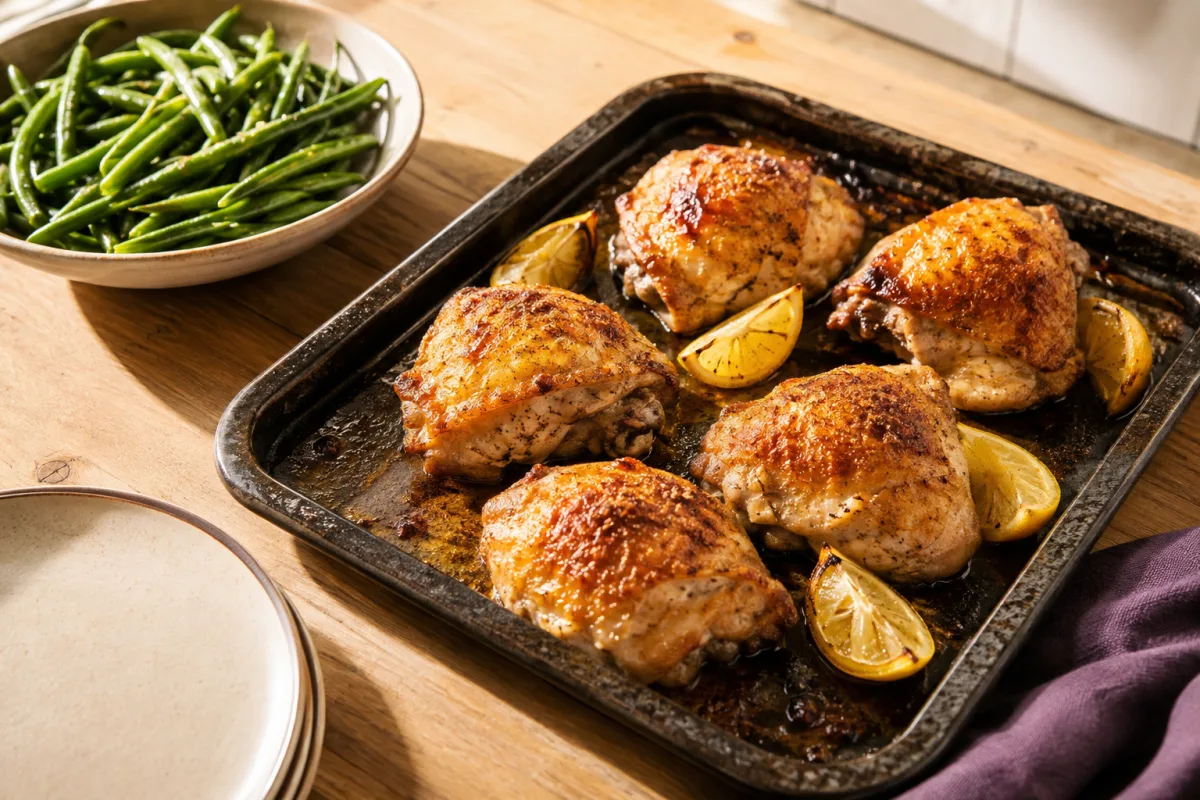
Chicken thighs are generous, useful and far less fussy than they sometimes seem. But a tray can still go wrong in two directions: the skin stays pale and soft, or the meat is cooked until dinner feels like a chore to chew. The answer is not a dramatic marinade or a complicated timing chart. It is a few small decisions before the tray goes into the oven.
To bake chicken thighs with crisp skin and juicy meat, dry the skin well, give the pieces room, use a properly hot oven and check the thickest part with a thermometer. That gives you a repeatable weeknight dinner, even when the thighs are not all exactly the same size.
Start with the kind of thighs you bought
Bone-in, skin-on thighs are especially forgiving in the oven. The skin can turn crisp while the meat has time to cook through. Boneless, skinless thighs work too, but they usually cook faster and do not need the same high-heat skin treatment.
| What you have | What to expect | The useful adjustment |
|---|---|---|
| Bone-in, skin-on thighs | crisp skin and a little more cooking time | roast skin-side up, with space between pieces |
| Boneless, skinless thighs | faster cooking and tender meat | start checking earlier so they do not overcook |
| Large or uneven thighs | different finish times on one tray | check the largest piece first with a thermometer |
If your thighs are frozen, thaw them safely before roasting rather than trying to make timing guesswork do all the work. Once they are ready to cook, take them out of their packaging, pat them dry with kitchen paper and wash your hands before touching the seasoning jar, fridge handle or salad ingredients.
Moody says: a crisp chicken skin starts before the oven. Dry it first, then let the heat do its quiet work.
The simple hot-oven method
This is a flexible method for skin-on thighs. Your packet may give different directions, so use it as the first reference, especially if the pieces are unusually small or very large.
- Heat the oven to 220°C / 425°F. Put a rack in the middle so the tray has room for air to move around it.
- Pat the chicken thighs dry, then place them skin-side up on a lightly oiled roasting tray or a tray lined for easy cleanup. Leave a little space between each one.
- Season with salt, pepper and one simple flavour direction, such as paprika and garlic powder, lemon zest and dried herbs, or cumin and coriander. A small amount of oil on the skin is enough.
- Roast until the skin is browned and the thickest part of a thigh reaches 74°C / 165°F, with the thermometer avoiding the bone. For average bone-in thighs, begin checking after about 35 minutes, then give them longer only if they need it.
- Let the chicken rest for a few minutes before serving. That is a good moment to toss a salad, warm bread or spoon the tray juices over vegetables.
Time is a guide, not proof. The USDA’s safe temperature chart lists 165°F / 73.9°C as the safe minimum internal temperature for poultry, including thighs. A thermometer in the thickest part, away from the bone, is more useful than cutting every piece open and hoping the colour tells you enough.
Why chicken thighs sometimes come out soft or dry
The skin went into the oven wet
Surface moisture needs to evaporate before the skin can brown well. Patting the chicken dry is not glamorous, but it matters. Avoid crowding the tray too: when pieces touch, they trap steam between them and behave more like they are braising than roasting.
The oven was not hot enough yet
Putting chicken into a barely warm oven makes the cooking time longer without helping the skin. Let the oven fully preheat. If it tends to run cool, rely on the thermometer and the skin’s colour rather than adding heat at the very end in a rush.
You kept opening the door
Checking once near the end is useful. Opening the oven repeatedly drops the heat and makes the timing less predictable. Give the thighs space to roast, then start checking with a thermometer when they are close.
You cooked every thigh for the same exact number of minutes
Chicken thighs vary in size, and trays vary in how they conduct heat. The right moment is when the thickest part is safely cooked, not when a timer says it ought to be. If one large thigh needs a few extra minutes, take the cooked pieces off the tray and let it finish alone.
Build a low-effort dinner around the tray
Roast vegetables beside the chicken, with a little planning
Potatoes, carrots, onions and sturdy broccoli can roast on the same tray if they have room. Cut them into pieces that can cook in the available time, and give them a light coating of oil and seasoning. Tender vegetables such as green beans or spinach are usually easier to cook separately near the end.
If the tray is already crowded, do not force another ingredient onto it. A quick side can be more useful than a heroic one-pan promise. Our easy sheet pan dinners have more flexible ways to decide what belongs in the oven together.
Turn leftovers into tomorrow’s dinner, not a vague container
Pull any extra chicken from the bone once it is cool enough to handle. It can go into a wrap, a grain bowl or a salad with a simple dressing. Choose the next use before it disappears behind the milk, especially if you are cooking for one or two people.
For a different way to make one cooked protein do more than one job, see cooking for one without boring leftovers. The goal is not to meal-prep a whole new identity. It is to make the next meal easier than starting from zero.
Use the pan juices deliberately
After taking the chicken out, spoon off excess fat if there is a lot. Then use a little hot water, stock or lemon juice to loosen the browned bits and drizzle that over the chicken or vegetables. It is a practical sauce, not an extra recipe, and it makes a plain plate feel more considered.
A few food-safety habits that actually help
Keep raw chicken separate from foods you will eat without further cooking. Use a clean board and knife for salad or bread after preparing the chicken, and wash hands and surfaces. Do not decide that chicken is done by cutting into it and looking for a particular colour: poultry can remain slightly pink in places even when it has reached a safe temperature, which is why the USDA recommends using a food thermometer.
If you are saving leftovers, cool and refrigerate them promptly in a covered container. When in doubt about how long food has been sitting out, the calmest decision is not to gamble on it.
Questions about baking chicken thighs
Should I cover chicken thighs in the oven?
Not if you want crisp skin. Roast them uncovered so surface moisture can escape. A cover is useful for a braise or a very different, softer result, but it works against this method.
Can I use boneless chicken thighs?
Yes. They usually cook more quickly than bone-in thighs, so start checking them earlier. Because there is no skin to crisp, a modest oven temperature and a close eye on the thermometer matter more than chasing deep browning.
Why are my chicken thighs still pink near the bone?
Colour is not a reliable safety test for chicken. Check the thickest part away from the bone with a thermometer, and cook poultry to 74°C / 165°F. If the temperature is there, use the chicken’s texture and your preference, not colour alone, to decide whether you want a few more minutes.
Do I need to flip chicken thighs while they bake?
No. Keeping the skin facing up lets it stay exposed to dry oven heat. Flipping introduces another chance to tear the skin or lose the crisp surface you are trying to build.
Baked chicken thighs do not need a complicated dinner plan. Dry skin, a hot oven, breathing room on the tray and a thermometer are enough to give you juicy meat, a crisp top and one less decision at the end of the day.
Need a dinner idea that matches the energy you actually have? Explore MoodDish and start from your mood and the ingredients already in your kitchen.