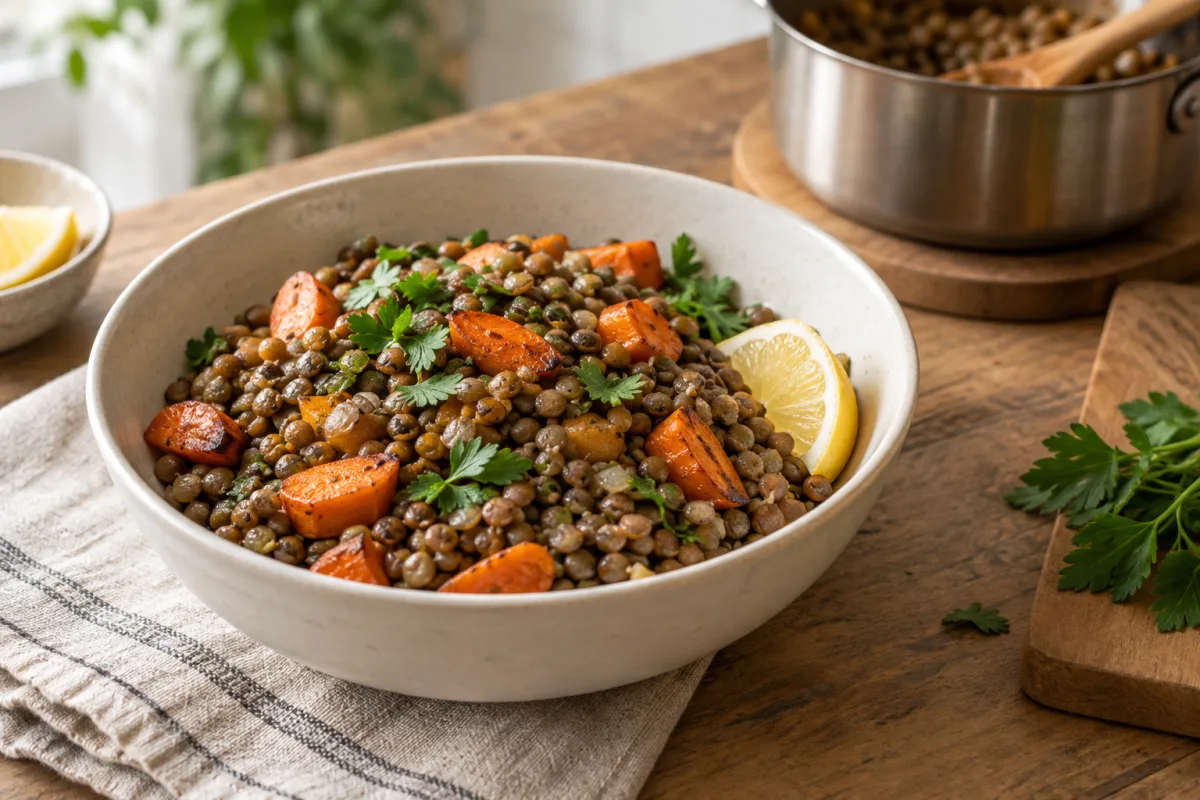
Dried lentils are one of the most useful things to keep in the cupboard, right up until you cook a pot that is somehow both hard in the middle and collapsing around the edges. The good news is that they do not need soaking or a fussy recipe to become dinner. They need a gentle simmer, an occasional taste and a plan for using them while they are still good.
For dried brown or green lentils, the reliable route is simple: sort and rinse them, simmer them in plenty of water, then drain them when they are tender but still holding their shape. That makes a batch flexible enough for a warm bowl tonight, a salad tomorrow or a quick soup later in the week. Red lentils are a different ingredient, designed to soften much faster, so save them for sauces, curries and soups instead.
Choose the lentil that suits dinner
The label matters more than a rigid cooking time. Brown and green lentils are the everyday varieties that work well when you want separate, tender lentils. French-style green lentils tend to stay particularly firm. Red lentils soften quickly and are better when you want a creamy texture. If your packet gives a method or a different timing, use that as your first reference.
| What you have | Best use | What to expect |
|---|---|---|
| Brown lentils | soups, bowls, weeknight sides | tender and soft, with a little shape |
| Green lentils | salads and warm grain bowls | a firmer, earthier bite |
| French-style green lentils | make-ahead salads | especially good at holding their shape |
| Red lentils | soups, dals and sauces | quick cooking and naturally soft |
You do not normally need to soak brown or green lentils. A rinse is enough for most packets. Spread the dry lentils briefly on a plate or run your fingers through them as you rinse, removing any small stone or damaged piece you happen to spot. It is a tiny step that makes cooking feel calmer once the pot is on.
Moody says: make a little more than you need, but only if you already know one easy way to use the leftovers. Tomorrow-you deserves a shortcut, not another mystery container.
The straightforward stovetop method
For about three portions, start with 1 cup of dried brown or green lentils and 3 to 4 cups of water. This is plenty of water for a simmer-and-drain approach, which is forgiving because you can taste as you go instead of hoping every drop absorbs at the perfect minute. You can use stock when you want extra flavour, but water works well when the rest of dinner brings seasoning.
- Rinse the lentils in a fine sieve under cool water.
- Put them in a saucepan and cover with fresh water by a few centimetres. Add a bay leaf, garlic clove or onion piece only if you have it and want the flavour, not because the method needs it.
- Bring the water to a boil, then lower the heat so the pot keeps a gentle, steady simmer.
- Leave the lid slightly ajar or off, and stir once or twice during cooking so you can check the water level.
- Start tasting after about 20 minutes for brown lentils, or a little later for green lentils. The finished lentil should be tender through the centre, not gritty, while still looking like a lentil.
- Drain when the texture is right. Season with salt, olive oil, lemon or vinegar while the lentils are warm, then build the rest of the meal around them.
Most brown or green lentils finish somewhere around 20 to 35 minutes, but variety, age and your simmer all change that range. Tasting is more useful than watching the clock. If the water is disappearing before the lentils are tender, add more hot water. If they are ready while water remains, drain them promptly so they do not keep softening in the pot.
Three small choices that prevent mush
Keep the boil gentle
A lively boil can knock tender lentils around until their skins split. That is not dangerous or a disaster, but it does make a salad or grain bowl less tidy. Once the pot reaches the boil, turn it down until the surface moves gently. You are looking for patient bubbles, not a rolling storm.
Add acidic ingredients after the lentils are tender
Tomatoes, vinegar and lemon are excellent with lentils, but use them once the lentils have softened to the point you like. They bring brightness at the end and let you judge the texture without a heavy sauce hiding it. A spoonful of tomato paste can wait for the final few minutes in a separate pan or sauce.
Drain, then give them a direction
Plain cooked lentils are useful, but they become dinner when they meet something sharp, fresh or crunchy. While they are warm, a little olive oil and lemon help them take on flavour. Add herbs, roasted vegetables, greens, feta, an egg or a spoonful of yoghurt depending on what is in the kitchen.
Three easy dried-lentil dinners
A warm lentil and roasted broccoli bowl
Roast frozen broccoli while the lentils simmer, then toss everything with lemon, olive oil and a little feta or grated cheese. The lentils make the bowl satisfying without asking you to cook meat, and the broccoli supplies browned edges. Our guide to roasting frozen broccoli without sogginess has the key step: do not crowd the tray.
Lentils with tomato paste and an egg
Warm a spoonful of tomato paste in a little oil, loosen it with a splash of water and fold in the drained lentils. Add spinach if you have it, then top the bowl with a fried or soft-boiled egg. If tomato paste regularly becomes an abandoned half-tube in your fridge, these ideas for using tomato paste on weeknights give it several other useful jobs.
A make-ahead lemony lentil salad
Let the lentils cool until just warm, then add chopped cucumber, herbs, anything crisp and a simple dressing. A dressing does not need a special bottle or exact measuring cups. This simple salad dressing guide is designed for tasting and adjusting as you go. Add leftover chicken, tinned fish or cheese when you want it to carry a fuller meal.
MoodDish is handy when the lentils are ready but the idea is not. Use the ingredients you already have as your starting point, then choose whether tonight needs something fresh, warming or quietly comforting.
Common questions about dried lentils
Do dried lentils need to be soaked overnight?
Usually no, not for ordinary brown or green lentils. Rinsing and simmering are enough. Some specialty varieties or older packets may take longer, so use the package as your guide and give yourself time to taste rather than trying to force the process.
Why are my lentils still hard?
They may simply need more time, especially if the packet has been in the cupboard for a long while. Keep them at a gentle simmer, add hot water if needed and test again after a few minutes. Very hard water can also make cooking take longer, which is another reason to rely on texture instead of an exact minute count.
How should I store cooked lentils?
Cool them promptly, put them in a clean covered container and refrigerate them. They are good cold in a salad or gently warmed with a splash of water. The USDA’s leftovers guidance is a useful reminder to refrigerate cooked food within two hours and to discard leftovers when you are unsure how long they have been sitting out.
Lentils do not need to become a cooking project. Rinse them, simmer them gently and taste them before you decide they are done. Then give them one bright flavour and one thing with texture. That is enough for a dinner that feels deliberate, even when you started with no plan at all.
When a cupboard staple is ready but you still need a dinner idea, explore MoodDish for a recipe direction that fits your mood.