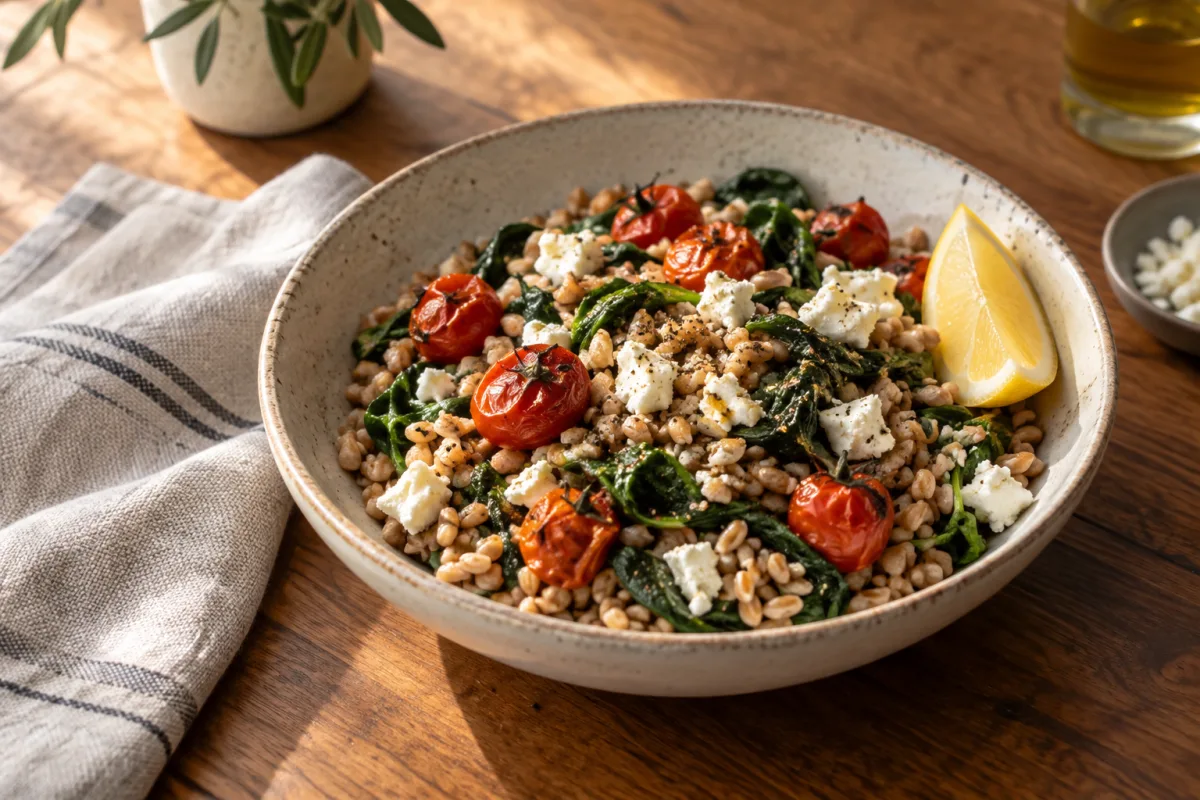
Farro is the kind of grain that makes a simple dinner feel deliberate. It has a pleasant chew, a nutty flavour and enough substance to carry vegetables, beans, cheese or a fried egg. The tricky part is that the word farro can mean a few different grains and preparations, so a single fixed cooking time is not very helpful.
To cook farro without making it mushy or leaving it stubbornly hard, start by checking whether yours is pearled, semi-pearled or whole. Then use plenty of simmering water, taste the grains near the end and drain them when the centre is tender but still has a little bite. It is a calm, forgiving method, especially for a dinner where the topping is still undecided.
Know which farro is in the bag
Pearled farro has had more of its outer bran removed, so it is usually the quickest option. Semi-pearled farro keeps more of the grain and may take longer. Whole farro needs the most patience and can benefit from soaking, depending on the package. None is automatically better. The useful choice is the one that matches the time you have.
Look at the label before you begin. It may list a specific method or say whether the farro has already been pearled. That guidance wins over any general rule, because grain size and processing vary.
| What is on the package | A practical approach |
|---|---|
| Pearled farro | Start tasting after about 20 minutes of simmering |
| Semi-pearled farro | Expect a longer cook and begin checking after about 25 minutes |
| Whole farro | Read the package first, and allow extra time or soak if it suggests it |
| Pre-cooked farro | Warm it according to its instructions rather than boiling it like dry grain |
Moody says: use the timer as a reminder to taste, not as a promise that every grain is ready at the same minute.
The easiest stovetop method
The pasta-style method gives you room to taste as you go. You do not have to calculate the exact amount of water the grain will absorb, and you do not need to worry if your farro cooks a few minutes faster or slower than a recipe says.
- Rinse the dry farro in a fine sieve under cool water.
- Bring a pot of well-salted water to a boil, then add the farro. Use enough water for the grains to move freely, as you would for pasta.
- Lower the heat to a steady simmer. Stir once or twice early on so any grains at the bottom do not settle together.
- Start tasting near the earlier end of the range on the packet. A good grain is tender through the centre, with a satisfying chew, not a chalky core.
- Drain it promptly in the sieve. Return it to the warm empty pot for a minute with the lid off, then fluff with a fork and add a little olive oil, lemon or herbs if you like.
Farro continues to soften a little while it sits. If it is going into a saucy stew, take it off the heat when it is just shy of your ideal texture. If it will be the base of a salad, drain it when it is exactly as chewy as you want to eat it.
Three details that make it better
Salt the water, then season the finished bowl
Salt in the cooking water gives the farro a baseline of flavour. The final seasoning is where dinner gets its direction: lemon and herbs for freshness, olive oil and Parmesan for richness, or a spoonful of tomato paste for depth. Salting both stages lightly is easier to control than relying on a heavy sauce at the end.
Do not leave it sitting in hot water
The simplest way to avoid soft, swollen grains is to taste often near the end and drain once the texture is right. If the farro has finished before the rest of dinner, spread it onto a plate or tray briefly so it stops steaming itself in the bottom of the pot.
Build a bowl from contrast
Farro likes something juicy, something green and something sharp. Roasted tomatoes, sautéed greens, a lemony dressing, crumbled feta, toasted nuts or a soft egg all work. You do not need every one of those elements. Two contrasting additions are enough to make a bowl feel complete.
Three easy farro dinners
A warm tomato, farro and white-bean bowl
Stir drained farro with a spoonful of tomato paste loosened in a little warm water, then add drained white beans and spinach until the leaves wilt. Finish with black pepper and lemon. If you keep tomato paste in the fridge but are never sure how to use the rest of the tube, our guide to using tomato paste for weeknight dinners gives it several useful jobs.
Farro with roasted frozen broccoli and feta
Put frozen broccoli on a hot tray while the farro simmers. Toss the cooked grains with the broccoli, feta and a little lemon or red-wine vinegar. This is a good dinner for a freezer night because the grain brings chew while the broccoli gets browned edges. Our method to roast frozen broccoli explains the one thing that matters most: give it enough space on the tray.
A no-recipe grain salad for tomorrow
Cool cooked farro until just warm, then mix it with any crunchy vegetable, herbs and a simple dressing. Add chickpeas, tuna, leftover chicken or cheese when you want it to carry more of a meal. A basic dressing does not need a bottle or a complicated ratio, and this simple salad dressing guide helps you adjust it by taste.
MoodDish is useful in exactly this moment. Farro can be the steady base, while the app helps you decide whether tonight needs something bright and light, warm and comforting or simply made from what is already in the kitchen.
Common farro questions
Should I soak farro first?
Pearled farro usually does not need it. Whole farro may benefit from a soak, particularly if the package calls for one. If you are not sure which kind you have, use the label as your starting point and allow more time rather than forcing the grains to cook faster.
Can I use stock instead of water?
Yes. Stock gives the grains more flavour, but it is not required. Water with salt is a perfectly useful base when the rest of dinner has strong ingredients, such as feta, tomato paste or a sharp dressing.
How do I store cooked farro?
Cool it promptly, transfer it to a clean covered container and refrigerate it. It is handy cold in a salad or gently warmed with a splash of water. If you are unsure how long something has been sitting out or stored, do not try to rescue it with extra heat.
Is farro gluten-free?
No. Farro is a type of wheat, so it is not suitable for a gluten-free diet. Quinoa or rice can be easier alternatives when you need a naturally gluten-free grain, though each has its own cooking method.
Cooking farro does not require precision that turns dinner into homework. Identify the grain, simmer it in plenty of water and taste it before draining. From there, a lemon, a vegetable and whatever protein sounds good are enough to turn it into a meal you will want to make again.
When you have a good base but need help choosing the rest, explore MoodDish for a recipe idea that fits your mood.