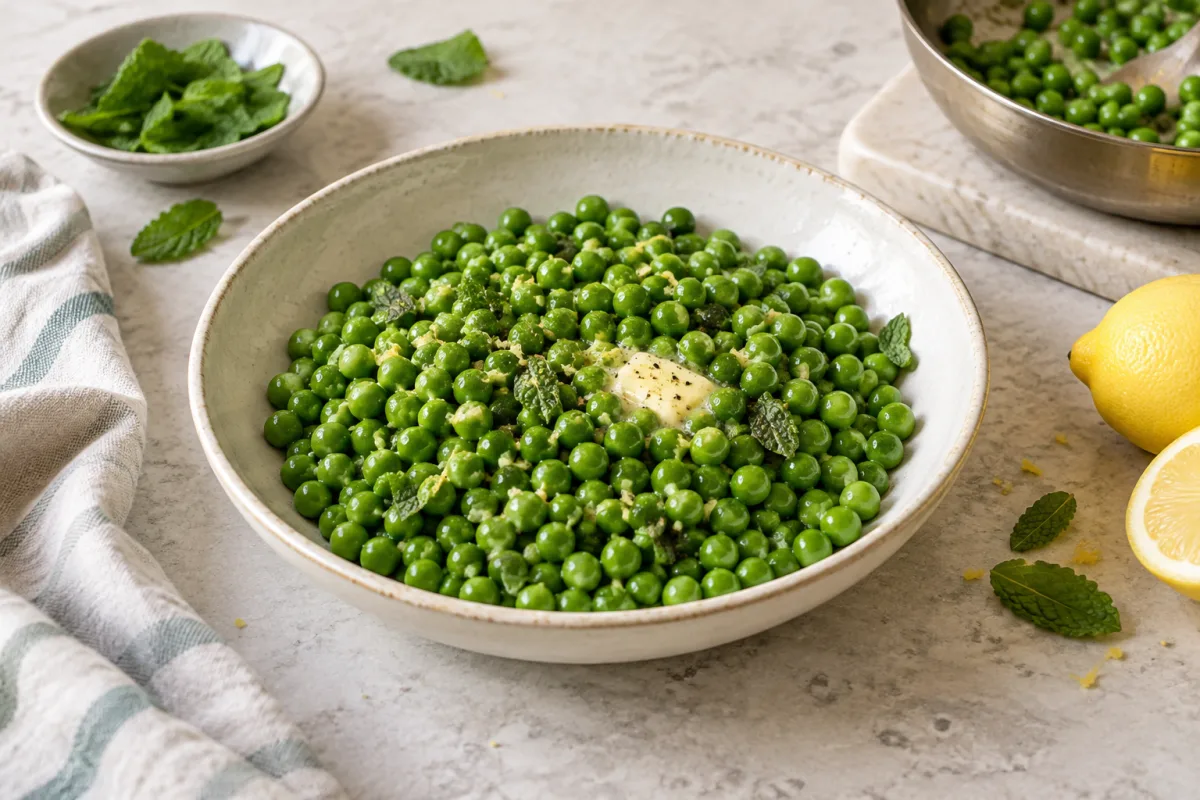
Frozen peas are one of the easiest ways to add something green to dinner, but they can also end up dull, wrinkled and sitting in a puddle at the bottom of the bowl. The usual issue is not the peas. It is giving them too much time and too much water for a vegetable that only needs a quick warm-through.
To cook frozen peas so they stay sweet and bright, take only the amount you need from the freezer, heat them briefly, then drain or finish them in a warm pan before serving. The packet is still the best reference for its specific product. These simple methods give you useful texture cues, whether peas are going into pasta, a potato, a bowl of grains or a side dish.
Choose the method that fits the rest of dinner
Frozen peas are already blanched before freezing, so they do not need the kind of long cooking you would give dried beans or a raw potato. A short method is usually enough. The best route depends on whether you want peas on their own, folded into something hot, or given a little extra flavour in a skillet.
| What dinner needs | A useful method | What to watch for |
|---|---|---|
| A quick side dish | brief simmer, then drain | peas should be hot, not wrinkled |
| One fewer pan | add them near the end of pasta cooking | do not leave them in for the whole boil |
| A microwave meal | heat with a small splash of water | drain excess water before seasoning |
| A more savoury finish | warm them in a skillet with butter or oil | add lemon and herbs after the heat |
There is no need to thaw peas on the counter. Take out the portion you want and return the bag to the freezer promptly. Follow the storage directions on the package, and do not use a bag that has been left warm for an unknown amount of time.
Moody says: peas do not need to become a separate recipe. Give them two or three minutes of attention, then let them add colour and sweetness to the dinner already happening.
The simple stovetop method
Bring a small saucepan of water to a gentle boil. You do not need a large pasta pot, just enough water for the peas to move around. Add the frozen peas straight from the bag and start checking quickly, because their size and the amount you add change the timing.
- Add the peas to gently boiling water.
- Let them heat just until they are hot through and a bright green. For many bags, this takes only a few minutes, but use the package as your guide.
- Taste one carefully. It should be tender with a little pop, not tough in the middle or soft enough to split easily.
- Drain them promptly in a sieve.
- Return the peas to the warm empty pan with a small knob of butter or a drizzle of olive oil, then add salt, pepper, lemon or herbs if you like.
Draining promptly is the important part. Peas left in hot water continue to soften, which is why a perfectly good bag can become grey-green and tired by the time it reaches the table. If dinner is not ready, dress them lightly and set them aside rather than leaving them submerged.
Two good alternatives when the hob is busy
Add them to pasta at the end
When pasta has only a few minutes left, add frozen peas directly to the same pot. They warm in the pasta water without needing their own pan. Drain everything together, keeping a little pasta water only if the sauce needs it. This is ideal for pesto, lemony pasta or a quick tomato sauce, where the peas are an ingredient rather than a side dish.
If your pasta often goes from hot to sticky while you finish the rest of dinner, drain it promptly and toss it with its sauce instead of leaving it in a wet pot. The same attention to space and moisture helps when you roast frozen broccoli, too.
Microwave them in a small covered bowl
Put the peas in a microwave-safe bowl with a spoonful of water. Cover loosely with a microwave-safe lid or plate, then heat in short stretches according to your microwave and the package directions. Stir once if needed, then drain any water that has collected before adding butter, olive oil, cheese or a squeeze of lemon.
This is a good route when the microwave is already doing the main job. A microwave baked potato plus peas, beans or cheese can be a fully convincing dinner, not just a side dish trying to make the plate look greener.
Turn frozen peas into something you want to eat
Butter, mint and lemon as a quick side
Warm drained peas in a pan with a small amount of butter or olive oil. Add torn mint or parsley, black pepper and a little lemon zest or juice after turning off the heat. The result is fresh enough beside fish, chicken, eggs or a potato, without asking for a shopping list.
A pea and white-bean bowl
Warm peas with drained white beans, a spoonful of water and a little garlic or chilli if that appeals. Spoon the mixture over rice, farro or toast, then add lemon and a fried egg, yoghurt or feta. For the grain part, how to cook farro gives you a forgiving simmer-and-drain method that does not demand exact timing.
Peas folded through a pantry pasta
Add peas near the end of the pasta pot, then toss them with tomato paste, pesto or olive oil and cheese. A can of beans or tuna can make it more substantial, but neither is required. Our guide to using tomato paste on weeknights has several ways to turn a small spoonful into a sauce that coats rather than overwhelms.
Small mistakes that make peas less appealing
Starting with a long boil
Peas need enough heat to be hot through, not a long spell in rapidly boiling water. If you have walked away and they look dull or are splitting, they are still safe to use, but they may be better folded into a soup, mash or sauce than served as a side.
Seasoning before removing extra water
Butter, cheese, lemon and herbs are all more effective once the cooking water is gone. Drain first, then add one clear finish. Otherwise, the flavour becomes diluted and the bowl feels watery even if the peas themselves are fine.
Defrosting more than you will use
Frozen vegetables are at their most useful when they let you take a realistic portion. Scoop out what fits tonight, close the bag and return it to the freezer. That small habit makes the bag more likely to save the next dinner too. The USDA’s freezer and food-safety guidance is a practical reference for keeping frozen food safely stored.
Questions about cooking frozen peas
Do frozen peas need to be thawed first?
No. They can go straight from the freezer into boiling water, a skillet, pasta water or a microwave-safe bowl. Cooking them from frozen is often easier because you can take only the portion you need and avoid a bowl of excess thawing water.
Why are my frozen peas wrinkled?
They have usually spent too long in heat, especially water. Next time, start checking earlier, drain them as soon as they are hot and use a finish such as butter, olive oil or lemon after they leave the water.
Can I cook frozen peas in a frying pan?
Yes. Add them to a medium-hot pan with a small amount of oil or butter and a splash of water. Cover briefly if needed to warm the centres, then uncover so the water can evaporate. Finish with seasonings only when the peas are hot and the pan is no longer wet.
Frozen peas are not there to make a meal look virtuous. They are a sweet, quick ingredient that can make pasta, a grain bowl or a jacket potato feel more complete. Keep the cooking short, get rid of excess water and give them one finish you genuinely like.
When dinner starts with a freezer bag and little energy, explore MoodDish for a recipe direction that fits your mood and the ingredients you already have.