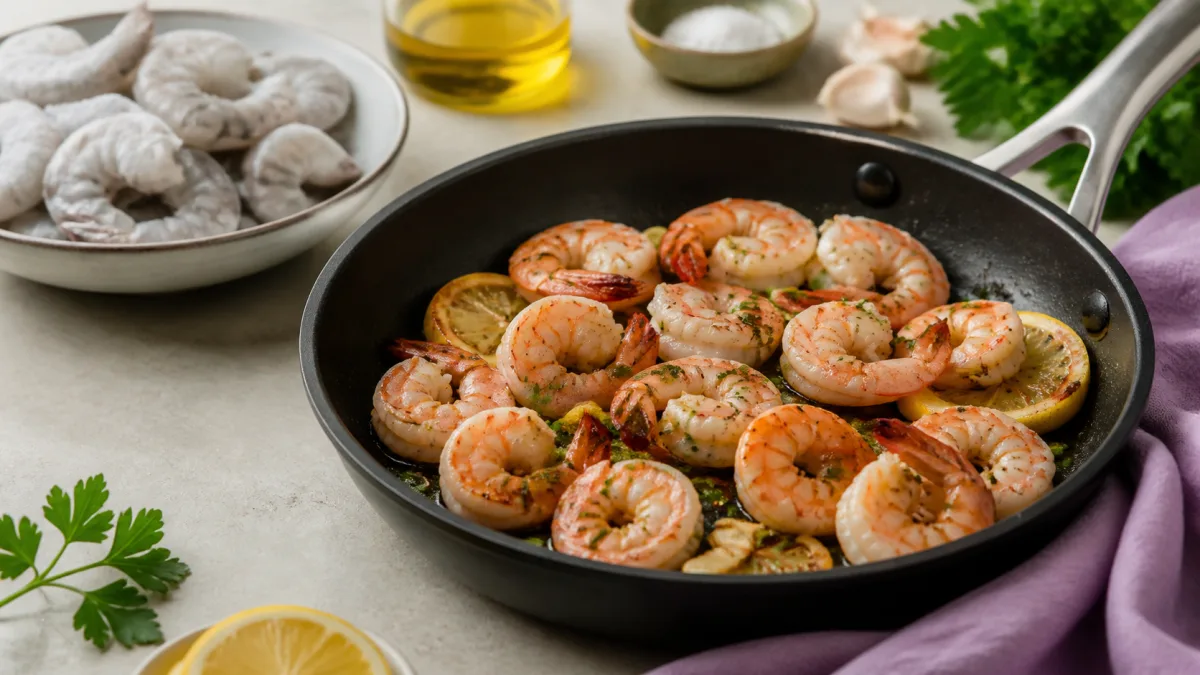
Frozen shrimp is one of the quickest routes from an almost-empty kitchen to a dinner that feels intentional. It can also turn from sweet and tender to tight and rubbery in the time it takes to answer a message. The problem is rarely a lack of skill. Shrimp simply cooks very fast, and extra water from freezing makes the timing harder to see.
To cook frozen shrimp without making it rubbery, thaw it when you can, dry it well, and cook it in a properly hot pan just until the flesh turns opaque. Then take it off the heat. The sauce, rice, pasta or vegetables can wait. The shrimp should not.
Start by checking what is actually in the bag
Frozen shrimp is sold raw or already cooked, peeled or shell-on, large or small. Those details change the job.
| Your bag says… | Your goal |
|---|---|
| Raw shrimp | cook it through, then serve straight away |
| Cooked shrimp | warm it briefly at the end, not cook it again |
| Shell-on shrimp | allow a little extra handling and use the shells as built-in protection |
| Peeled shrimp | dry it carefully and watch it closely in the pan |
Read the bag before choosing a method. Its preparation and storage directions are specific to that product, so they take priority over any general cooking guide. If shrimp smells strongly off after thawing, or if you are unsure how long it has been sitting out, do not try to rescue it with extra seasoning.
The easiest thawing method: slow, cold and planned
The least fussy approach is to move the portion you need from freezer to fridge the night before. Put it in a bowl or on a plate so any liquid stays contained. By dinner time, drain it and pat it dry with a clean towel or paper towel.
Need it sooner? Keep the shrimp sealed in a leak-proof bag and submerge the bag in cold water. Change the water as it warms, then cook the shrimp as soon as it has thawed. Avoid thawing on the counter. The outer shrimp can warm while the centre is still frozen, which makes both food safety and even cooking harder.
Drying is not a fussy restaurant trick. A wet shrimp cools the pan and releases steam. A drier shrimp gets a quick, tasty sear before the middle overcooks.
Moody says: decide whether dinner needs thawing while you make coffee or clear breakfast. Future you gets the fast shrimp; present you only moved one bag.
The hot-pan method for tender shrimp
Set out the rest of the meal first. Cook rice, start pasta, chop a vegetable, or open the sauce before the shrimp hits the heat. That gives you the freedom to stop cooking at the right moment instead of letting it wait in the skillet.
- Pat thawed raw shrimp dry and season it simply with salt, pepper and an optional spice.
- Heat a wide skillet over medium-high heat with a small amount of oil.
- Add shrimp in one layer. Leave space where you can instead of piling it into a damp heap.
- Let the first side cook until it begins to turn pink and opaque at the edge, then turn it.
- Cook the second side only until the thickest part is opaque. Remove it to a plate straight away.
- Add lemon, herbs, garlic butter or sauce after the shrimp is off the direct heat, then return it only briefly if the dish needs it.
Exact minutes vary with shrimp size and whether it was fully thawed. Visual cues are more dependable: raw grey flesh becomes opaque and pink, and the shrimp curls into a loose C shape. A very tight circle is a sign you may have pushed it too far, so it is better to check one early than to wait for every piece to look identical.
For raw seafood, make sure the thickest part is cooked through. The U.S. Food and Drug Administration advises thawing frozen seafood in the refrigerator or, more quickly, in a sealed bag in cold water. It says most seafood should reach 145°F, or 63°C, and that shrimp is done when the flesh is firm, pearly and opaque. Read its fresh and frozen seafood safety guidance for the full context, then follow the package instructions and the food-safety guidance where you live.
Can you cook shrimp straight from frozen?
You can, but it is harder to get a good sear because the frozen surface gives off water. If time is short, use a two-stage approach instead of dropping a solid block into hot oil.
Put the frozen raw shrimp in a skillet with a small splash of water over medium heat. Cover just long enough for the pieces to separate. Drain away the liquid, pat the shrimp dry if it is safe and practical to do so, then return the pan to the heat with oil and finish with the quick hot-pan method above.
This is not the prettiest route, but it is more reliable than trying to brown shrimp in the puddle created by ice. For cooked frozen shrimp, thawing is even more worthwhile: it needs only a brief warm-through in a sauce or soup at the very end.
Three fast dinners that do not bury the shrimp
Lemon shrimp with pasta and greens
Cook pasta and save a little of its cooking water. While it drains, sauté garlic or chilli flakes in the skillet, then add the shrimp for its quick cook. Toss pasta with greens, lemon and enough cooking water to make a light sauce. Add the shrimp back at the end, just long enough to coat it.
The point is to give the shrimp a supporting cast, not a second round of cooking. If you want something crisp beside the pasta, make a simple salad dressing without a recipe before the pan gets busy.
A rice bowl with freezer vegetables
Cook or reheat rice, then roast or microwave a bag of vegetables while the shrimp thaws. Put the shrimp, vegetables and rice in a bowl with lemon, soy sauce, chili crisp or yogurt, depending on what you enjoy.
It is a helpful shape for a night when you need dinner to arrive quickly. Our guide to roasting frozen broccoli gives one low-effort vegetable option that can cook while you handle the shrimp.
Tomato and white bean skillet
Warm drained white beans and a little tomato sauce in a skillet. Cook the shrimp separately or make a clear space in the pan and add it only at the end. Finish with herbs, pepper and bread for scooping.
Keeping the shrimp until last means the beans can simmer as long as they need without making the seafood tough. This same flexible approach works when your fridge contains a few loose ingredients, as in what to cook with what’s left in the fridge.
The mistakes that usually cause rubbery shrimp
Starting with a crowded, cool pan
Shrimp releases water quickly. A crowded pan lowers the temperature and turns that water into steam. Work in batches if you are cooking a lot, or use the widest pan you have.
Cooking the sauce and shrimp for the same length of time
Tomato sauce, curry and beans benefit from a few minutes together. Shrimp does not. Build the sauce first, then cook shrimp at the end and fold it in just before serving.
Treating cooked shrimp like raw shrimp
Pre-cooked shrimp is already done. Add it to a hot soup, stir-fry or pasta sauce only long enough to heat through. A long simmer will not improve it.
Questions about cooking frozen shrimp
Do I have to thaw frozen shrimp before cooking it?
No, but thawing makes a quick sear and even texture easier. If you cook from frozen, separate the shrimp gently, drain its liquid and finish it in a hot pan rather than trying to brown it while icy.
How do I know when shrimp is done?
Raw shrimp turns opaque in the thickest part and usually curls into a loose C. Check a larger piece if sizes vary. Do not rely on pink colour alone if the shrimp was already cooked, and follow the package directions for your product.
What should I serve with shrimp when I have no plan?
Think in three parts: shrimp, a quick base such as rice, pasta or bread, and a vegetable or fresh element. A lemony sauce, herbs or a favourite condiment can make the whole plate feel connected without a complicated recipe.
Frozen shrimp works best when it removes a decision instead of creating another one. Thaw a portion when you can, heat the pan properly, and let the shrimp leave the heat while it is still tender. The rest of dinner can stay flexible.
When dinner starts with one freezer bag and a tired brain, explore MoodDish for an idea that meets you where you are.