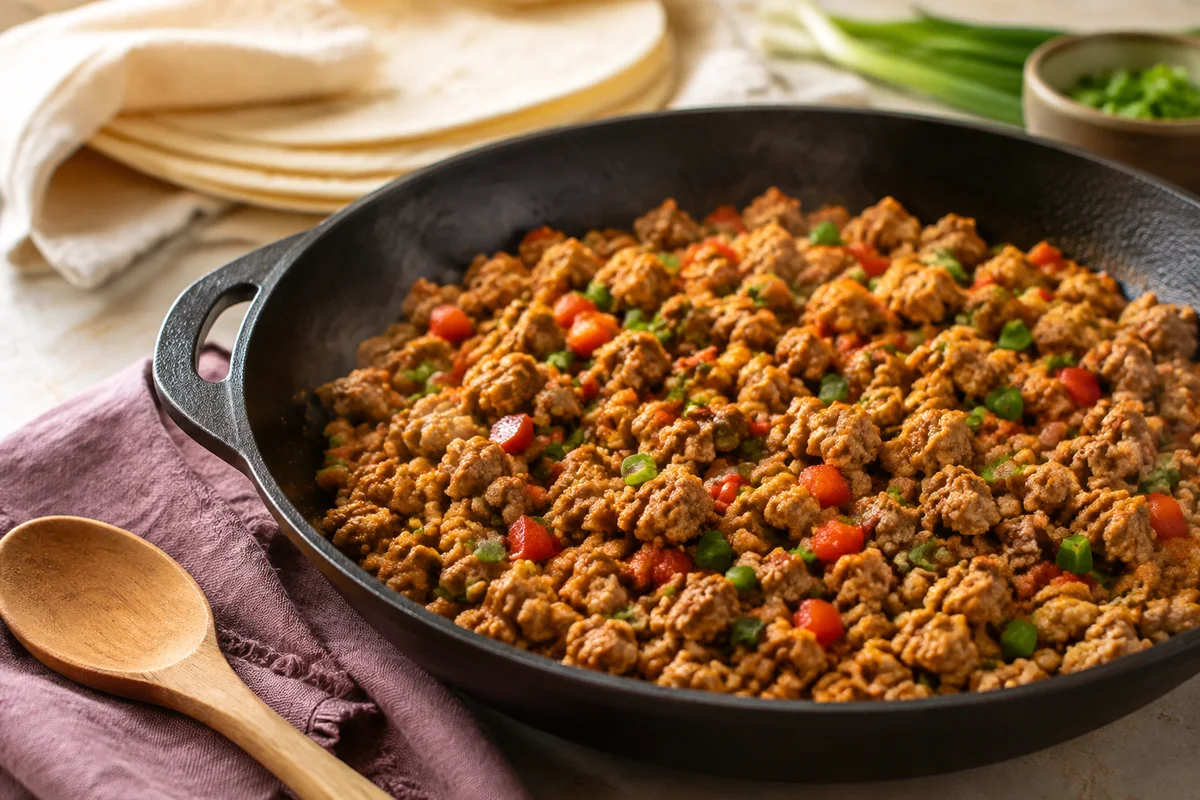
Ground turkey is one of those useful fridge ingredients that can become dinner quickly, then disappoint when it turns pale, dry and oddly bland. That is not because you need a complicated recipe. It is usually because the pan was crowded, the turkey was cooked long after it was ready, or all of the flavour was meant to arrive at the very end.
To cook ground turkey without drying it out, give it a hot, roomy pan, let it brown before breaking it into tiny pieces, and add a little moisture or sauce only after it has picked up colour. The goal is not to chase restaurant-style crust on every crumble. It is to get a savoury, tender base for tacos, grain bowls, pasta or lettuce wraps on an ordinary weeknight.
Start with a hot pan and a small amount of turkey at a time
Ground turkey is leaner than many other ground meats, so it has less margin for a long, hard cook. Put a wide skillet over medium-high heat and let it warm before the turkey goes in. Add a small amount of oil if your turkey is very lean or your pan tends to stick.
Then add the turkey in a loose layer. If you have a large pack and a small pan, cook it in two batches. This feels like an extra step, but a crowded pan releases moisture quickly. Instead of browning, the meat steams in its own liquid, and you end up cooking it longer in an effort to make it look more appetising.
| What you notice | What to do | Why it helps |
|---|---|---|
| A lot of liquid in the pan | use a wider pan or a smaller batch next time | the turkey gets a chance to brown rather than steam |
| Large pale clumps | leave them alone briefly, then break them up | contact with the pan builds flavour first |
| Tiny dry crumbs | use a spatula to make medium pieces, not dust | a little texture keeps the filling more pleasant |
| Meat sticking quickly | lower the heat slightly and add a small splash of oil or water | you keep the browned bits without burning them |
Do not stir it constantly from the first second. Let one side sit against the pan for a minute or two, then use a wooden spoon or spatula to break it into bite-size pieces. Turn those pieces and give the new surfaces another short moment on the heat.
Moody says: ground turkey does not need to be punished into dinner. Give it room, let it brown a little, then stop cooking when it is safely done.
The simple skillet method
You can use this as a foundation for almost any flavour direction. Set out the rest of your dinner before you start: tortillas, rice, a sauce, vegetables or a bowl. That way the turkey does not sit in the skillet while you decide what it is supposed to become.
- Heat a wide skillet over medium-high heat. Add a small amount of oil if needed.
- Add the ground turkey in a loose layer and season it lightly with salt and pepper.
- Leave it undisturbed briefly so the underside can take on some colour.
- Break it into medium crumbles, turn them and cook until there is no raw turkey left.
- Use a food thermometer in the thickest part of the turkey mixture. Ground poultry needs to reach 165°F / 74°C for safety. The USDA’s safe-temperature chart is clear that colour alone is not a dependable measure.
- Take the skillet off the heat or lower it immediately, then add a sauce, a spoonful of yogurt, a little stock, lime juice or the vegetables that only need warming through.
The thermometer step is not about making dinner anxious. Ground turkey can look browned before it has reached a safe temperature, and it can remain a little pinkish after it has. A quick temperature check lets you stop at the right moment instead of cooking it extra-long just to be sure.
Build flavour before the turkey dries out
Ground turkey likes a clear direction. You do not need a long list of spices, but a little flavour in the pan gives it a much better chance than trying to rescue a cooked pile of meat with salt alone.
Start with one route that sounds good:
- onion or garlic, cumin and chilli for taco-style bowls;
- tomato paste, oregano and a splash of pasta water for a quick red sauce;
- ginger, soy sauce and lime for lettuce cups or rice bowls;
- smoked paprika, mustard and a little stock for a warm sandwich filling.
If you are using onion, pepper or mushrooms, cook them first until they have softened a little, then move them to the edge of the skillet before adding the turkey. That gives the meat some direct contact with the pan. Once it has browned, mix everything together and add the final moisture.
A spoonful of tomato paste is especially useful here. Let it cook briefly in oil with the aromatics before you add water or stock, then fold the turkey through. Our guide to using tomato paste for better pantry dinners explains how that short moment in the pan makes the flavour rounder rather than raw.
Three dinners that make ground turkey feel less repetitive
Taco-style bowls with a cool finish
Cook the turkey with onion, cumin, chilli powder or smoked paprika. Add a splash of water or stock once it is cooked, just enough to loosen the browned bits and carry the seasoning. Spoon it over rice with black beans, chopped tomato, corn, avocado or whatever vegetables you have.
Finish with yogurt, lime, hot sauce or grated cheese. The cool or sharp element matters because it keeps a lean filling from feeling dry. If your rice is already cooked from another meal, this is a particularly fast way to give it a second job.
A quick tomato turkey pan for pasta or toast
Cook garlic or onion in a little oil, then add tomato paste and let it darken slightly. Brown the turkey, add tinned tomatoes or a splash of water, and simmer only long enough for the flavours to meet. Stir in spinach or frozen peas at the end if you want a vegetable without another pan.
Serve it with pasta, polenta, rice or good toast. If the pasta is your base, save a small ladle of its cooking water. It can loosen the sauce so the turkey stays coated instead of dry. The same small habit helps in our guide to easy sheet pan dinners: a simple finish connects the parts of a meal more than an extra complicated step does.
Lettuce cups or wraps for a low-decision dinner
Cook the turkey with ginger, garlic and a small amount of soy sauce. Add chopped water chestnuts, grated carrot, frozen peas or finely sliced peppers if you have them. Once the turkey is safely cooked, turn the heat down and add a squeeze of lime or a spoonful of a sauce you enjoy.
Spoon it into lettuce leaves, tortillas or a wrap, then add something crunchy. Cucumber, shredded cabbage, pickles or bagged salad all work. If an open bag of leaves needs using, our ideas for using bagged salad before it wilts can help it become part of dinner rather than a side you forget to serve.
The mistakes that most often lead to dry turkey
Starting with a cold or crowded skillet
When the pan is not hot enough, turkey gives off water while it slowly warms. It will still cook, but you are less likely to get any flavourful browning before it becomes firm. Preheat the skillet and give the meat room. If the pack is too much for the pan, save yourself the wait and work in batches.
Breaking it into tiny pieces immediately
Very small crumbs expose more surface area to the heat. They can become dry before the centre of the larger pieces has caught up. Let the turkey begin to brown in larger pieces, then break it up to the size you want for the final dish.
Simmering it while the sauce reduces
Tomato sauce, beans and vegetables may want a few minutes of gentle simmering. Ground turkey does not need to be there for all of it. Build the sauce first if it needs time, then add the cooked turkey close to serving. This is the same useful timing rule as with frozen shrimp: the protein gets its short cook, while the rest of dinner can take the time it needs.
Trying to judge safety from colour alone
Ground poultry can look brown before it has reached a safe internal temperature, so colour is not the final check. Use a food thermometer and cook it to 165°F / 74°C. Once it reaches that point, keeping it on the heat longer will not make it safer, only more likely to dry out.
Questions about cooking ground turkey
Do I need to add oil to ground turkey?
Not always. Some packs have enough fat to cook in a well-seasoned or nonstick skillet without extra oil. A small amount can help a very lean pack brown and prevent sticking. Start with less than you think you need, because you can add a little more if the pan looks dry.
How do I make ground turkey taste less bland?
Season it in layers. Add salt and one spice or aromatic while it cooks, then finish with something bright, salty or creamy such as lime, lemon, yogurt, cheese, soy sauce or a good sauce. One clear flavour route is more useful than adding every spice jar at once.
Can I cook it ahead for another dinner?
Yes. Cool it promptly, store it in a clean covered container in the refrigerator and plan a specific next use, such as a taco bowl, pasta sauce or wrap. When reheating, follow local food-safety guidance and make sure it is hot through. The easiest way to avoid a dry second meal is to reheat it briefly in a little sauce or stock rather than in a dry pan.
Ground turkey is at its best when it takes a decision off your plate. Brown it with enough space, use a thermometer to know when it is done, then give it one lively direction. That is enough for a filling that works with the ingredients you already have, even on a night with very little energy.
When you have one ingredient but not yet a dinner, explore MoodDish for an idea that starts with your real kitchen and energy.