
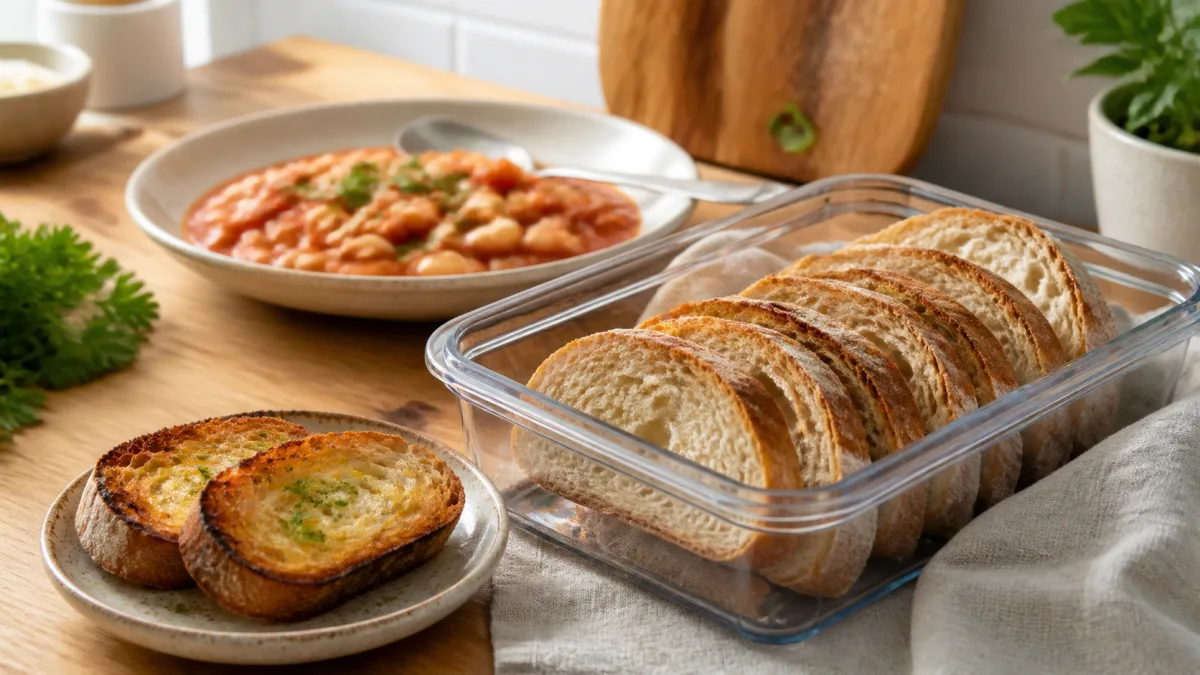
Bread can make dinner feel solved. A couple of slices turn eggs into a meal, give soup something to lean on, or make a sandwich feel like the sensible option instead of a backup. Then the loaf goes from perfect to stale just as you realise you will not finish it in time.
Learning how to freeze bread is less about preserving a perfect loaf forever and more about giving your future self an easy dinner. Freeze it while it still tastes good, portion it the way you actually eat it, and you will have toast, sandwich bread or something to scoop up a quick bowl whenever the cupboard feels unhelpful.
The USDA says commercially baked bread keeps its best quality in the freezer for about three months. Frozen food kept continuously at 0°F / -18°C stays safe, while recommended freezer times are mainly about quality. You can read its specific bread-storage advice if you want the wider storage context.
Should you freeze bread before it goes stale?
Yes. Freezing is most useful when the bread is still at a stage you would happily eat. It cannot turn a dry loaf back into a bakery-fresh one, but it does pause the quality you have now. If you know you will use only four slices this week, freeze the rest today rather than waiting for a rescue mission on Sunday.
This is especially useful for people cooking for one or two. Buying a whole loaf can be practical, but only if the later slices have a believable job. A freezer changes “we should probably finish this” into “there is bread for tomorrow’s soup night.”
Moody says: bread is a very good dinner backup because it asks almost nothing of you. Freeze it in the shape that makes saying yes to dinner easiest.
The simple way to freeze a loaf
There is no need for an elaborate freezer system. The aim is to limit air, avoid one solid frozen block, and make it easy to take only what you need.
- Let freshly baked bread cool completely. Warm bread in a sealed container creates condensation, which turns into icy patches later. If you bought a room-temperature loaf, you can skip this step.
- Slice or separate it first. Slice a loaf before freezing if you usually want toast or sandwiches. For rolls, pitas or bagels, freeze them individually or in pairs.
- Wrap for the way you cook. A freezer-safe bag or airtight container works well. Press out excess air from a bag without crushing the bread. If slices tend to stick, place a small piece of baking paper between every few slices.
- Label the date if it helps. This is not a test of organisation. A date is useful only if your freezer contains a few mystery loaves and you want to use the older one first.
- Freeze it flat where possible. A flat bag freezes quickly and is easier to stack. Once the slices are firm, you can move the bag wherever it fits.
Do not freeze bread in its original thin paper bag alone. It does not give much protection against dry freezer air or strong odours. If the bread came in a sturdy sealed plastic bag, you can put that inside a second freezer-safe bag for more protection.
How much bread should you freeze in each portion?
The most useful portion is the one that matches a real meal in your life. A giant frozen loaf is not much help if you need to thaw it all for one slice of toast.
| Your usual dinner | Useful freezer portion | Easy use |
|---|---|---|
| Eggs, beans or soup for one | 2 slices | Toast straight from frozen |
| Sandwich night for two | 4 slices | Defrost briefly, then fill and toast |
| Dip, hummus or a shared bowl | 4 to 6 slices | Warm in the oven or toaster, depending on thickness |
| Burgers or filled rolls | 2 rolls | Defrost only the number you need |
| A leftover half loaf | Individual slices | Take one at a time for a quick side |
You do not have to pre-plan every dinner to do this well. Just think about the bread you reach for on a tired evening. If your favourite answer is two pieces of toast with eggs, make that answer effortless. If you usually make toasted sandwiches, freeze four-slice portions.
For a kitchen that often ends up with half-used ingredients, this is the same low-pressure approach as our guide to cooking for one without boring leftovers: give one ingredient a second job before it becomes a problem.
Do you need to thaw bread before using it?
Often, no. Most sliced bread can go directly from the freezer to the toaster. Choose a lower setting first, then add another short cycle if the middle needs it. A toaster is good at bringing back the crisp edge that makes frozen bread feel like a deliberate choice rather than an emergency.
For a sandwich you want soft rather than toasted, take out the slices while you gather the filling. They usually defrost quickly at room temperature because they are thin. For a roll or a thick piece of sourdough, use a little more time: leave it wrapped on the counter briefly, then warm it in the oven or split and toast it.
Avoid leaving bread out for a long time just to be cautious. It is fine to use it straight from frozen, and it is better to thaw only the amount you plan to eat. The freezer is useful precisely because it helps you stop treating the rest of the loaf as a deadline.
Four easy dinners that start with frozen bread
Beans on toast, with one strong finish
Warm a can of beans with a little tomato sauce, olive oil, garlic, chilli flakes or whatever seasoning you like. Toast two frozen slices while the beans heat, then add a squeeze of lemon, grated cheese or a spoonful of yogurt. The bread turns a cupboard meal into a proper plate in less time than deciding whether to order something.
If you want more ideas that begin with pantry food, our 15-minute weeknight pantry guide gives the same kind of building blocks without requiring a long shopping list.
A grilled cheese that uses the odds and ends
Take out the number of slices you need, then fill them with cheese and any small extra that sounds good: cooked mushrooms, mustard, leftover roasted vegetables, pickles or a thin layer of chutney. Toast the sandwich in a pan over gentle heat, or use a sandwich press if you have one.
The useful rule is to keep wet fillings modest. They can make the bread soggy before the cheese melts. A small amount of something sharp is usually enough. Pair the sandwich with soup, a handful of greens or chopped tomatoes, and dinner is done.
Soup plus toast, instead of soup alone
Soup is a reliable low-effort dinner, but it can feel unfinished on its own. Toast from the freezer fixes that without asking you to cook another component. Rub a cut garlic clove over the toast if you have one, add olive oil or cheese, then use it to scoop up lentil, tomato or vegetable soup.
This is a good backup for a night when cooking feels like too much. If the problem is the number of decisions rather than the effort, the no-recipe approach in how to cook when you hate cooking can make that first step smaller.
A fast open sandwich with an egg
Toast one or two slices. Add a fried or scrambled egg, then finish with something fresh or sharp: tomato, bagged greens, hot sauce, lemony yogurt, pickles or herbs. You do not need a complicated topping plan. The bread is doing the job of a base, and the egg gives the plate enough substance to feel satisfying.
If an open bag of leaves is also asking for attention, put a handful beside the toast or add it under the egg. Our guide to using bagged salad before it wilts has a few more ways to give it a useful role.
How to avoid freezer burn and disappointing toast
Freezer burn is mostly a quality problem: bread gets dry, pale or leathery where too much air reaches it. You can prevent most of it with a well-closed freezer-safe bag or container, not by buying special equipment.
- Freeze bread while it is fresh, not once it already tastes stale.
- Remove as much air as you reasonably can from the bag.
- Keep the bread away from a freezer door that is opened constantly, if you have room.
- Use the older portions first, especially if you notice ice crystals or dry edges.
- Do not keep opening the same bag for a single slice if you can make small portions instead.
If a piece has dried out a little, toast is still often its best next job. Use it for croutons, breadcrumbs or a hearty soup side. But if it smells odd, has obvious mould, or has been handled in a way you do not trust, do not try to rescue it with heat.
Questions about freezing bread
Can I freeze bread in the bag it came in?
You can, but thin shop packaging is not always ideal for longer storage. Put it inside a freezer-safe bag or airtight container, particularly if you want it to stay pleasant for more than a short time. Sliced bread is easiest to use when it is already portioned.
How long does frozen bread last?
The USDA says commercial breads and rolls retain their quality in the freezer for about three months. It may remain safe longer when kept continuously frozen, but texture and flavour are likely to be better if you use it within that quality window.
Can I refreeze bread after thawing it?
For plain bread, refreezing may affect texture more than safety when it has been handled properly. The simplest routine is still to take only the slices you need. That keeps the rest frozen and gives you better toast next time.
What is the quickest way to defrost a roll?
For a small roll, let it sit at room temperature for a short time while you prepare the rest of dinner, then warm it in the oven or split it and toast the cut sides. If you need only a little crispness, you can often warm it directly from frozen.
A freezer loaf is not a grand meal plan. It is one quiet way to make the kitchen friendlier on a busy night. Freeze bread before it becomes an obligation, take out the amount you need, and let two slices make dinner feel much more possible.
When the freezer, fridge and cupboard do not add up to an obvious dinner, explore MoodDish for an idea that starts with what you already have.