
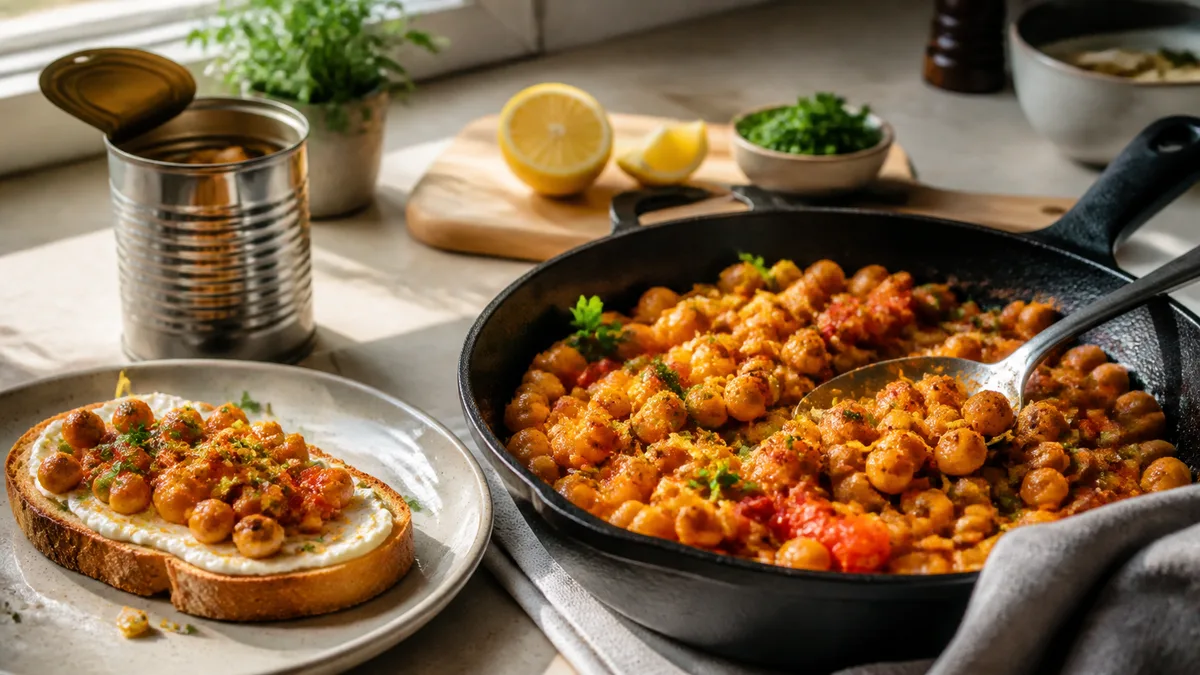
A can of chickpeas is easy to buy and even easier to ignore. They can taste a little flat straight from the tin, especially when you are hungry enough to need dinner but not motivated enough to start a project. The fix is not a complicated recipe. It is giving them heat, seasoning and one contrasting texture.
To make canned chickpeas taste good, drain and rinse them first, then pick a direction: bright and lemony, smoky and crisp, tomatoey, creamy, or crunchy. Each method below uses ordinary kitchen ingredients and can become a meal rather than a side dish.
The small prep step that changes everything
Tip the chickpeas into a colander, rinse under cool water, then shake them dry. Rinsing removes the liquid from the tin and gives you a cleaner flavour to build on. If you are frying or roasting them, patting them fairly dry with a clean tea towel or paper towel helps them brown rather than steam.
You do not need to remove every loose skin. It is fine if a few come away, but chasing every one turns a quick dinner into fussy work. Start with a hot pan or hot oven, enough oil to coat the chickpeas, and seasoning that you actually like.
| What you want tonight | Start with | Finish with |
|---|---|---|
| Bright and fresh | olive oil, garlic, chickpeas | lemon and herbs |
| Warm and smoky | oil, paprika, cumin | yogurt or feta |
| Saucy and comforting | tomato paste or chopped tomatoes | bread, rice or pasta |
| Crispy and snackable | hot oven, oil, spices | a salad or grain bowl |
Moody says: canned chickpeas are not a meal plan on their own. Give them a job, a temperature and something sharp or creamy beside them, then they stop tasting like a cupboard compromise.
1. Make lemony skillet chickpeas for toast or a bowl
Warm olive oil in a wide frying pan over medium heat. Add a sliced garlic clove or a pinch of garlic granules, then add the drained chickpeas with salt and black pepper. Let them sit briefly before stirring so a few sides can take on colour. Add a squeeze of lemon and chopped parsley, dill or whatever soft herbs you have.
Pile them onto toast spread with yogurt, labneh, cream cheese or hummus. You can also spoon them over couscous or rice with cucumber and tomatoes. The chickpeas bring substance, while the lemon stops the bowl feeling heavy.
If you are cooking for one, save half the can in a covered container and give it a different direction tomorrow. Our guide to cooking for one without boring leftovers has the same useful principle: repeat an ingredient, not the exact meal.
2. Turn them into a smoky, saucy pan of dinner
Start with onion if you have five extra minutes. Otherwise, heat olive oil with smoked paprika, ground cumin and a small spoon of tomato paste. Stir for a few seconds, then add chickpeas and chopped tomatoes or a splash of water. Simmer until the sauce clings to the chickpeas instead of pooling around them.
Finish with a handful of spinach, a spoon of yogurt, feta, or a fried egg. Eat it with bread, flatbread or rice. The formula is forgiving: no tomato paste? Use jarred pasta sauce. No spinach? Add frozen peas near the end. The goal is a savoury sauce and enough of a base to scoop it up.
This is a particularly good weeknight fallback because the whole meal can come from shelf-stable food plus one fresh extra. For more building blocks that earn their place in the cupboard, see pantry staples for 15-minute weeknight dinners.
3. Roast them for contrast, not perfection
Heat the oven to 220 °C / 425 °F. Toss dry chickpeas with oil, salt and a spice mix such as paprika and cumin, curry powder, or dried oregano and chilli flakes. Spread them in a single layer on a tray and roast until they are golden, shaking the tray once or twice.
Exact timing depends on the size of the chickpeas, how dry they were and how your oven runs, so use colour and texture rather than a strict number. They will crisp as they cool, but they are at their best the day you make them. Scatter them over a salad, a soup, roasted vegetables or a grain bowl.
Roasted chickpeas do not need to become a snack you eat standing at the counter. Put them on a plate with a base and a sauce. A little crunch can turn an otherwise soft bowl into dinner you actually look forward to.
4. Make a smashed chickpea sandwich filling
Put drained chickpeas in a bowl and crush about two-thirds with a fork. Leave the rest whole for texture. Mix in lemon juice, olive oil, salt, pepper and a little mustard or mayonnaise if that sounds good. Add chopped celery, pickles, red onion, capers or herbs if you have them, but do not delay lunch while looking for every possible add-in.
Spread the mixture inside a sandwich with greens and tomato, or on toast with cucumber. It is also a good way to use the last spoonful of yogurt or a lonely carrot, grated straight into the bowl. Keep the texture a little rough. Smooth chickpeas are great in hummus; for a sandwich, small pieces make each bite more interesting.
When the fridge is full of half-ingredients, the same approach works beyond chickpeas. Our article on what to cook with what’s left in the fridge starts with a simple base, protein and fresh element instead of a perfect shopping list.
5. Let chickpeas carry a no-cook dinner
For a hot night, you may not want a pan at all. Rinse chickpeas and toss them with chopped tomato, cucumber, olive oil, lemon, salt and pepper. Add feta, olives, herbs or a spoon of pesto if you have them. Serve with pita, bread or crackers.
The useful part is deciding that the chickpeas are the filling element, not a garnish. Add bread for carbohydrates, vegetables for freshness and a punchy dressing for flavour, and the plate is complete. If you need more no-heat ideas, pair this with our no-cook dinners for hot nights.
Common mistakes that make canned chickpeas disappointing
Adding them to a cold, crowded pan
If the pan is cold or packed too tightly, the chickpeas release moisture and warm through without picking up flavour. Heat the pan first, work in one layer when possible, and give them a short undisturbed moment before stirring.
Seasoning only at the end
Lemon, herbs and hot sauce are great finishes, but salt and spices need a little contact with hot oil or sauce. Add a base layer of seasoning while the chickpeas cook, then taste and brighten at the end.
Treating them as the only component
Chickpeas are useful, but a bare bowl of them can still feel like a compromise. Pair them with bread, grains or potatoes, plus something crisp, creamy or acidic. Dinner becomes much more satisfying without becoming more complicated.
Questions about canned chickpeas
Do canned chickpeas need to be cooked?
They are already cooked, so you can eat them after draining and rinsing. Heating them is about texture and flavour, not making them safe to eat. Follow the label if you are using a specific seasoned or prepared product.
Can I use the liquid from the can?
The liquid, often called aquafaba, can be used in some baking and cooking applications. For the quick dinner ideas here, drain it away so the chickpeas can brown or absorb the sauce more easily.
What spices work best with chickpeas?
Paprika, cumin, curry powder, coriander, chilli flakes, garlic, black pepper and dried herbs all work well. Start with one or two, not every jar in the cupboard. Lemon, vinegar, yogurt or a salty cheese can then bring the finished dish into focus.
Canned chickpeas are at their best when they remove a decision, not when they become another ingredient you feel obliged to use. Keep one or two flavour routes in mind, then let the tin become a genuinely good dinner on the night you need it.
When all you have is a can, a few fridge extras and limited energy, explore MoodDish for a recipe idea built around what is actually in your kitchen.