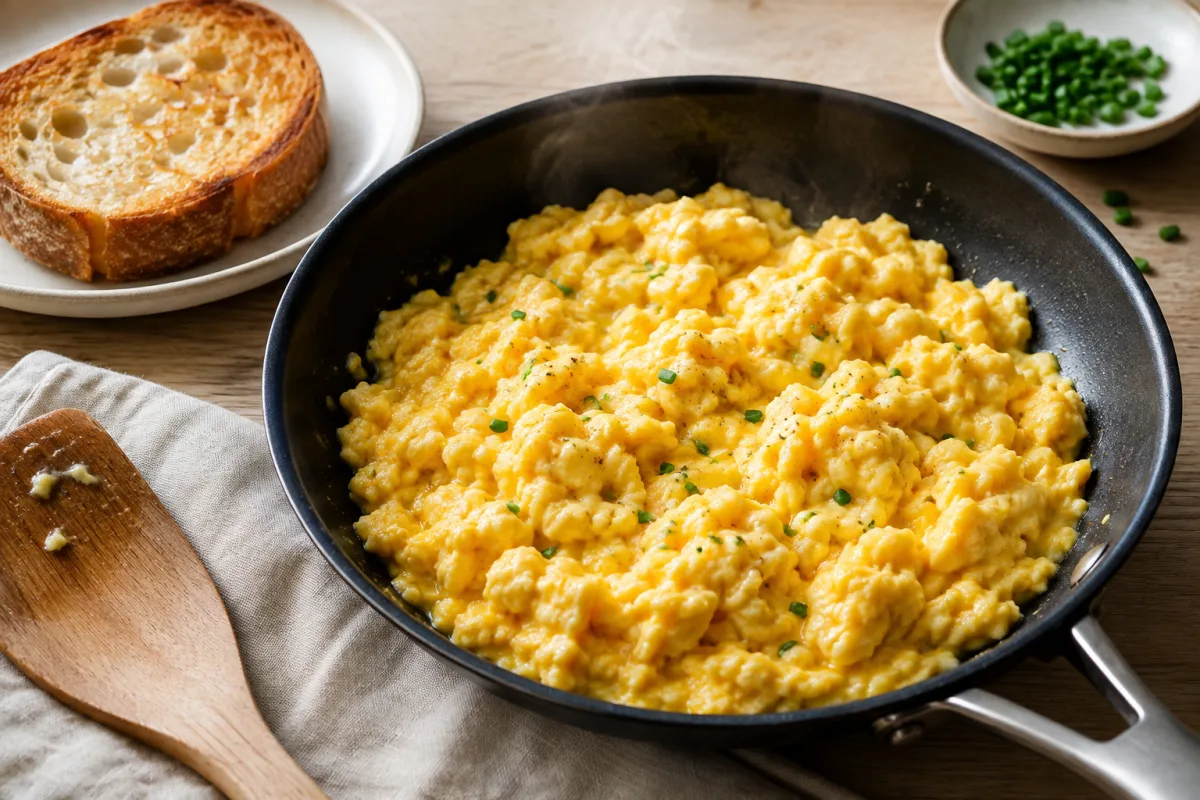
Scrambled eggs sound like the kind of dinner that cannot go wrong, right up until they turn dry, bouncy and oddly grey around the edges. The usual reason is not that you need a restaurant trick. Eggs keep cooking quickly in a hot pan, so the useful skill is simply knowing when to slow down and when to take them off the heat.
To make creamy scrambled eggs, use a gentle heat, move the eggs through the pan in slow folds, and stop while they still look softly set. The residual heat will finish the last bit. It is a small routine that makes eggs, toast and whatever is in the fridge feel like a deliberate meal rather than a backup plan.
Set yourself up before the pan is hot
Scrambled eggs move fast once they start setting, so do the tiny bits of preparation first. Crack the eggs into a bowl, add a pinch of salt and beat them with a fork until the yolks and whites look evenly combined. Have a heatproof spatula and your plate nearby.
Use a non-stick skillet if you have one in good condition. A small amount of butter or oil is enough to help the eggs slide and adds a little richness. There is no need to add cream for good texture. Milk, cream or a spoonful of yogurt can be a flavour choice if you enjoy it, but gentle heat makes the bigger difference.
| What you notice | The simplest move |
|---|---|
| Eggs catch the pan straight away | lower the heat and add a little more butter or oil next time |
| Very large, dry clumps form quickly | the pan is too hot, take it off the heat briefly |
| The eggs look loose at the end | plate them now, the remaining heat will keep setting them |
| The eggs look firm before you serve | add a small spoonful of water or dairy if you use it, then fold briefly over low heat |
Moody says: the goal is not to stir eggs into tiny pieces. Give them time to form soft folds, then get them onto a plate before the pan decides to keep cooking them for you.
The gentle-fold method
Put your skillet over low to medium-low heat. Add the butter or oil, then pour in the beaten eggs once the fat has melted or warmed. You do not need a fiercely hot pan. You want enough heat for a slow, even set.
- Let the eggs sit for a few seconds, just until a thin layer begins to set around the edge.
- Use the spatula to push one set edge gently toward the centre.
- Tilt the skillet so the still-liquid egg flows into the space you made.
- Repeat around the pan with unhurried folds, pausing briefly between each one.
- When the eggs form soft curds and still look slightly glossy in places, take the pan off the heat and transfer them to a plate.
Do not wait for every bit to look dry in the skillet. The warm pan continues to cook the eggs as you serve. If you prefer firmer scrambled eggs, leave them a little longer, but lower the heat rather than trying to finish them fast.
The exact time changes with your pan, hob and number of eggs. Texture is the signal worth watching. Soft folds that hold together without releasing raw liquid are a better target than a strict minute count.
Why gentle heat makes a difference
High heat forces the egg proteins to tighten quickly. That gives you fast results, but it also squeezes out moisture, which is how scrambled eggs become dry. A lower temperature gives you more control: the curds grow gradually, and you have time to remove them before they go too far.
You do not need to keep the spatula moving every second. Let a small section set, then fold it. Constant fast stirring breaks the curds into very small pieces and makes it harder to see when the eggs are nearly ready.
If you are cooking eggs for someone who needs extra food-safety precautions, use pasteurised eggs where appropriate and make sure the eggs are thoroughly cooked. FoodSafety.gov’s egg-safety guidance is a useful reference for handling, refrigeration and cooking. Your local advice and the carton instructions take priority.
Three ways to make scrambled eggs a real dinner
Put them on toast with one sharp thing
Toast bread while the eggs cook. Add the eggs, then finish with one punchy ingredient: hot sauce, sliced tomato, lemony yogurt, pickles or a little grated cheese. You do not need all of those at once. One contrast is enough to stop the plate feeling flat.
If your bread is already in the freezer, our guide to freezing bread for easy dinners makes that route even more useful on a low-energy evening.
Fold in the last handful of greens
When the eggs are almost ready, add a small handful of spinach or tired salad leaves and fold just until wilted. Do not add a wet mountain of leaves, because it will cool the pan and make the eggs watery. A few leaves, a little cheese and toast can turn a nearly empty fridge into dinner.
For other ways to give an open bag a believable second job, see how to use bagged salad before it wilts. The point is not to make a perfect salad. It is to let one ingredient fit the meal you actually want.
Make a quick breakfast-for-dinner plate
Serve scrambled eggs beside warm beans, roasted vegetables, tomatoes or a simple dressed cucumber. The eggs give the plate a soft centre; the other component supplies something fresh, crisp or savoury. A small bowl of simple salad dressing can pull a few raw vegetables together while the pan is still warm.
This is the kind of flexible combination MoodDish is made for. You can start with the eggs, then choose what sounds good from the ingredients that are already there instead of forcing a full recipe.
Small mistakes that make eggs less creamy
Starting with a very hot skillet
If the butter browns instantly or the eggs hiss loudly, lower the heat before you add them. A hot skillet is useful for a fried egg, but it gives you very little margin for soft scrambled eggs. Start gently and give yourself the option to stay in control.
Leaving the eggs in the pan while you make toast
The eggs will keep setting even after the heat is off. Have the toast or plate ready first, then move the eggs as soon as they look softly done. This one change often matters more than an extra ingredient.
Adding too many wet extras at the start
Tomatoes, spinach and sauces can all be good with eggs, but they release moisture. Cook them separately, drain them if necessary, or fold in a small amount near the end. Let the eggs be the thing you can judge clearly in the pan.
Trying to fix overcooked eggs with lots of dairy
A spoonful of yogurt, crème fraîche or milk can soften a slightly dry batch, but it cannot fully reverse an overcooked pan. Next time, lower the heat and take the eggs off earlier. The method is more dependable than adding more ingredients.
Questions about creamy scrambled eggs
Do I need milk or cream?
No. Eggs, a little fat and gentle heat are enough for soft curds. Add dairy only because you like the flavour or texture it brings. If you do, keep the amount modest so the eggs still set predictably.
Should I stir scrambled eggs constantly?
No. Slow folds with short pauses make it easier to create tender curds and see when they are nearly done. Constant stirring tends to make the texture finer and makes the timing harder to read.
Why are my scrambled eggs watery?
The heat may be too low for too long, or a wet ingredient may have been added early. Use a gently warm pan, cook the eggs until softly set, then add watery ingredients sparingly or cook them separately.
Creamy scrambled eggs are not about chasing perfection at breakfast. They are one of the quickest ways to make a warm meal when you have eggs, a pan and very little patience for extra steps. Keep the heat calm, fold instead of scrambling furiously, and serve them while they still look tender.
When you want a dinner idea that fits the energy you actually have, explore MoodDish and start with what is already in your kitchen.