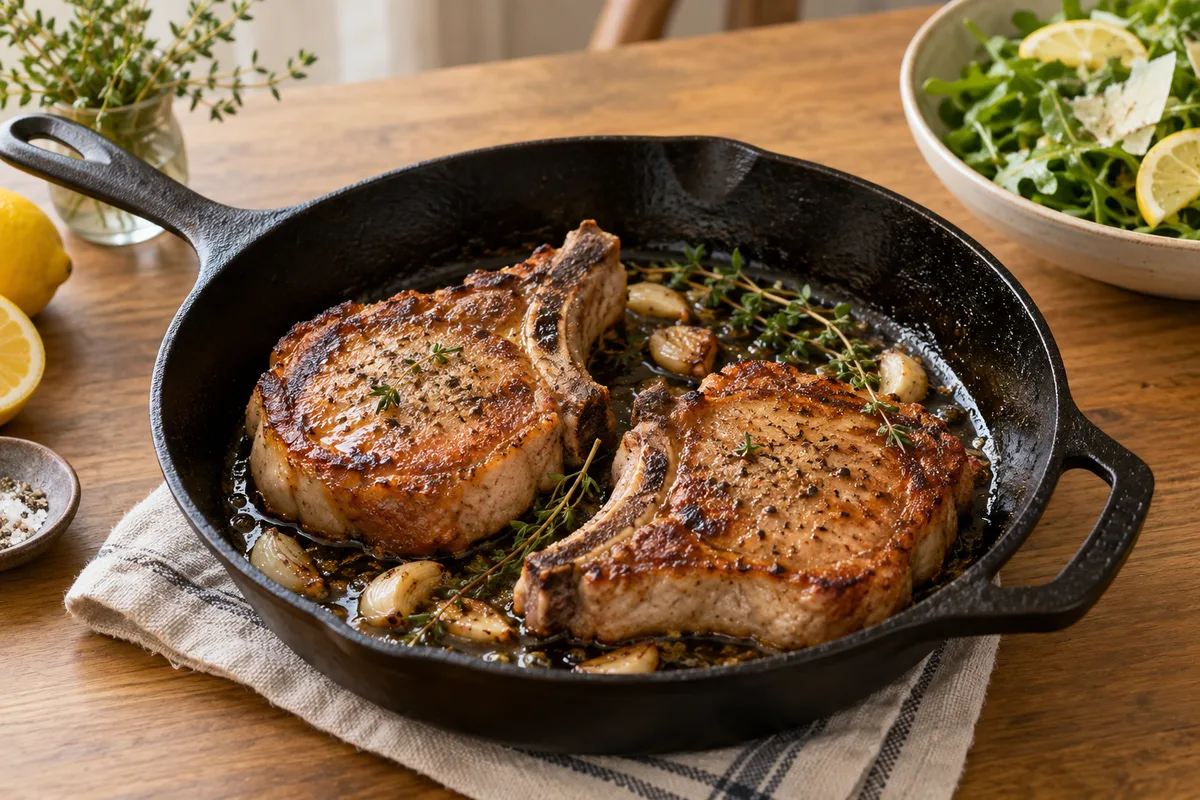
Pork chops are one of those dinners that look easy until they come out tough. The usual problem is not a lack of seasoning. It is a cold chop going into a timid pan, followed by too much cooking while you wait for the middle to catch up.
For juicy pork chops in a pan, choose chops with some thickness, dry them well, build colour over medium-high heat and use the centre, not the clock, to decide when they are ready. A quick rest matters too. It is the small pause that lets the heat settle while you make a salad, warm bread or put rice on the table.
Start with the chop you actually have
Boneless and bone-in chops both work. Bone-in chops can take a little longer and tend to be forgiving because the meat is often thicker. Thin boneless chops are fast, but they have much less room for error. If yours are under about 1.5 cm / half an inch thick, keep the heat a little lower and start checking very early.
Take the chops from the refrigerator while you set out the rest of dinner. You do not need to leave raw meat on the counter for hours. The useful move is simply removing surface chill for a short time, then patting the chops dry with paper towel. A dry surface sears. A wet one steams.
| What you have | Best approach |
|---|---|
| Thick bone-in chops | steady pan heat, then a short gentle finish |
| Thick boneless chops | sear both sides and check the centre early |
| Thin boneless chops | use medium heat and turn often enough to avoid a dark crust before the centre cooks |
| Pre-brined or seasoned chops | taste first and add salt lightly |
Moody says: the pan does not need to be smoking. You want a confident sizzle when the chop lands, not a kitchen that feels like an emergency drill.
The pan method, step by step
Use a heavy frying pan or cast-iron skillet if you have one. Heat it over medium-high heat, then add a small amount of oil with a high enough smoke point for your pan. Season the chops with salt and pepper just before they go in.
- Lay the chops in the hot pan with a little room between them. If they are crowded, cook in batches.
- Leave the first side alone until it releases easily and has a deep golden crust. Moving it too early tears the surface before it can brown.
- Turn the chops and reduce the heat slightly if the pan is getting very dark. Add a crushed garlic clove, thyme or a small knob of butter only near the end, so they flavour the pan without burning.
- Check the thickest part with an instant-read thermometer, avoiding the bone. The USDA safe-temperature chart advises 145°F / 63°C for whole pork chops, followed by at least a three-minute rest.
- Move the chops to a warm plate and rest them loosely covered for three to five minutes. Use the pan juices on the finished meat rather than leaving it in the skillet to keep cooking.
Exact minutes are not a reliable promise. Chop thickness, pan material and hob power change them quickly. A thermometer makes this much calmer: it tells you what is happening at the centre before a beautifully browned crust turns into an overcooked dinner.
The details that keep the centre juicy
Let the pan heat before the meat arrives
If the oil barely moves and the pan is only warm, the chop releases moisture before it can build a crust. Give the pan a few quiet minutes, then test with a tiny drop of water, which should flicker and disappear. Dry the pan before adding oil and meat.
Do not try to brown the garlic from the start
Garlic and fresh herbs are useful flavour, but they burn long before a pork chop is finished. Add them after the first turn, when the pan has already done the hard part. Spoon a little scented butter or oil over the chop for the final minute if you like, then stop.
Rest before slicing
It is tempting to cut straight into the best-looking chop. Resting gives the temperature time to even out and makes the plate less frantic. Put the salad together, dress greens or slice lemon while you wait. The meal keeps moving even though the meat gets a pause.
Three low-effort pork-chop dinners
Lemon greens and warm bread
Toss rocket, spinach or bagged salad with lemon, oil and a pinch of salt. Put the rested chop beside it with good bread or a roll. The sharp salad is a useful contrast to the pork and pan juices. If there is half a bag of leaves in the refrigerator, our guide to using bagged salad before it wilts has more ways to turn it into dinner.
Pork chops with quick potatoes
Start a potato in the microwave while you cook the chops. Split it, add a little yogurt, butter or mustard, then spoon over the pan juices. It gives you a hot base without asking the pan to do two jobs at once. Microwaving a baked potato is especially handy when the clock matters more than a perfectly crisp skin.
A tomato-and-bean skillet finish
After the chops rest, use the same pan for a spoonful of tomato paste, a splash of water and a drained can of white beans. Scrape up the browned bits, add a few greens if you have them, then return the chops only long enough to warm through. Our guide to using tomato paste for weeknight dinners explains how a small amount gives pantry food a clear direction.
Common pork-chop problems
My chops browned before the middle was ready
The pan was too hot for the thickness of the chops. Next time, sear the first side, turn them, then lower the heat so the centre can catch up. A thicker chop can also finish briefly in a moderate oven if your pan is oven-safe, but a thermometer is still the better guide.
My chops are dry even though they looked fine in the pan
They likely stayed on the heat a little past the point they were ready. Start checking earlier, especially with thin chops, and take them out as soon as the centre reaches the safe target. Sauce can make tonight’s chop pleasant, but earlier checking prevents the issue next time.
Can pork chops be a little pink?
Colour is not a dependable safety test. Pork can stay slightly pink for several reasons, including the way it was cooked. Use a thermometer in the thickest part and follow the safety guidance instead of guessing from colour alone.
Juicy pork chops are not about a secret marinade or a complicated sauce. They come from a dry surface, steady heat and knowing when to stop. Once the chops rest, dinner can be as simple as greens and bread, or as complete as a potato and a quick pan sauce.
When you want dinner to match your energy instead of another long search, explore MoodDish for a recipe idea that fits your mood.