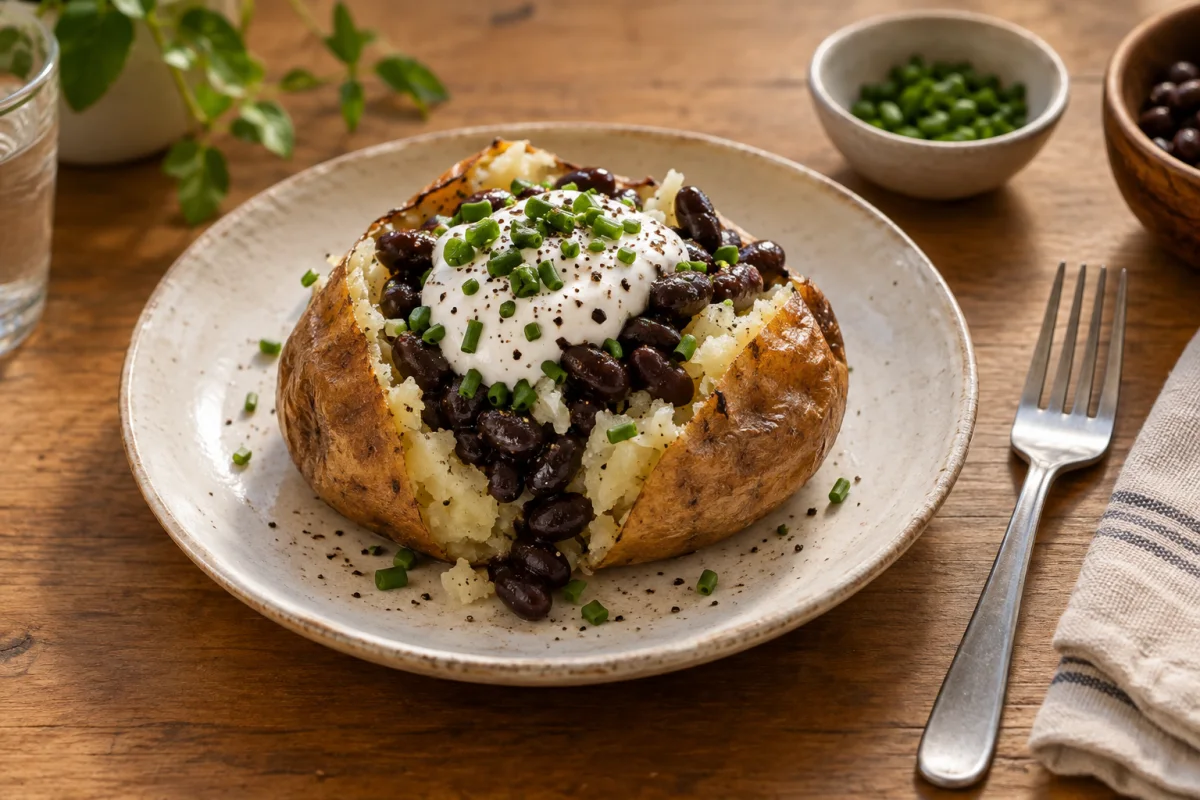
A baked potato sounds like the kind of dinner that needs a long oven wait. On a busy night, the microwave gives you the useful part much faster: a hot, fluffy centre that can carry almost anything you have in the fridge. The only disappointment is cutting one open to find a hard middle, a tough skin or a potato that has gone oddly dry.
To make a microwave baked potato that is tender rather than rubbery, choose a potato of a sensible size, pierce it, cook in short stretches and let it rest before opening it. The rest is less about following an exact minute count and more about checking the centre with a fork. Once it is soft, you have a dinner base for beans, cheese, leftover vegetables or a simple egg.
Pick a potato that will cook evenly
Floury or all-purpose potatoes are particularly good for a fluffy centre, but you do not need to leave dinner behind because you have a waxier potato. It will simply be a little denser and may need a different finishing idea, such as a filling or sauce. What matters most is choosing potatoes that are close in size if you are cooking more than one.
Scrub the potato under running water, then dry it. Prick it several times with a fork so steam has a route out as it cooks. This small step is worth doing, even when you are hungry. Put the potato on a microwave-safe plate with space around it, rather than wrapping it tightly in something that traps steam.
| If you have… | What it is good for | A helpful adjustment |
|---|---|---|
| One medium floury potato | a fluffy, split potato | start checking after a few minutes, then cook in short bursts |
| A large potato | a more filling single portion | turn it halfway through and expect extra time |
| Two similar potatoes | dinner for two | leave a gap between them and turn both halfway |
| A waxy potato | a firmer base for toppings | cook until fork-tender, then add something creamy or saucy |
No microwave heats in exactly the same way. Wattage, plate material and the size of the potato all matter, so a time from someone else’s kitchen is only a starting point. A fork meeting no firm centre is the signal you are looking for.
Moody says: the microwave is not cheating the oven. It is choosing the version of potato dinner that fits tonight.
The simple microwave method
This approach works for one medium potato. If your microwave or potato is especially powerful or large, treat the timings as a prompt to check rather than a promise.
- Scrub and dry the potato, then prick it all over with a fork.
- Put it on a microwave-safe plate. Cook on high for about four minutes.
- Use a tea towel or oven glove to turn it carefully, as the plate and potato will be hot.
- Cook for another three to four minutes, then test the centre by pushing in a fork or small knife. It should slide in with little resistance.
- If the middle is still firm, continue in one-minute bursts, checking each time instead of adding a long final stretch.
- Let it rest for two minutes before splitting it open. The trapped heat finishes softening the middle and the steam becomes less fierce.
For a thicker or larger potato, you may need a few more minutes. If you are cooking two, they will also need longer than one, but not necessarily twice as long. Turn them, keep a little space between them and test each one because they can finish at different times.
Make the inside fluffy, then decide what the dinner needs
Once the potato is tender, cut a cross into the top and squeeze the sides gently with a towel. Fluff the inside with a fork, then add a pinch of salt and something that brings moisture or richness. Butter is one option, but yogurt, olive oil, grated cheese, pesto or a spoonful of cottage cheese work too.
The potato is the warm base, not the whole meal. Adding a protein and one bright or crunchy thing turns it into a plate that feels deliberately assembled. You do not need a special filling. You need something already open that you would enjoy eating with a warm potato.
Black beans, yogurt and a sharp finish
Warm canned black beans with a little cumin, chilli or tomato paste if you have it, then spoon them over the split potato. Add plain yogurt, lime or lemon and sliced spring onion. The contrast of warm potato, creamy yogurt and a sharp finish is enough to make a cupboard dinner feel complete.
If your beans are technically fine but not especially exciting, use a few of the ideas in how to make canned black beans taste good. You are not making a second recipe, just giving a tin one clear direction.
Broccoli and cheese when the freezer is doing the work
Microwave or roast a handful of frozen broccoli while the potato cooks, then pile it on with cheese or a yogurt sauce. A little lemon, mustard or black pepper can make the whole thing taste more awake. Frozen vegetables are especially useful here because you only need one portion.
For browned edges rather than a soft vegetable side, our guide to roasting frozen broccoli gives you the oven route. If the microwave is all you can face, heat the broccoli until hot, drain any excess water and let the cheese handle some of the comfort.
Leftover chicken or chickpeas, plus a quick dressing
Use a small portion of leftover chicken, chickpeas or tuna on top of the potato. Add a handful of leaves, chopped cucumber or pickles for contrast. A quick yogurt-and-lemon dressing makes it feel connected without requiring a sauce from a bottle.
The useful pattern is the same one behind what to cook with what is left in the fridge: choose a base, a filling thing and a finish. A warm potato gives the random pieces a place to land.
Want a crisp skin? Give it a short second step
The microwave makes a tender skin, not a crisp one. If crispness is important, microwave the potato until almost tender, then finish it in a very hot oven, air fryer or dry skillet cut-side down. A little oil and salt on the outside helps, but it is optional.
This is not a requirement for a good meal. A fully microwave-cooked potato with a generous topping is still a valid dinner. The finishing step is for the nights when you have an extra few minutes and want a different texture, not for turning a quick method into a project.
Common microwave potato problems
The middle is still hard
The potato needs more time, not a higher level of optimism. Turn it and cook in short one-minute stretches, testing the centre after each. Very large potatoes heat slowly in the middle, so patience in small increments is more reliable than one long blast.
The outside is dry and tough
It may have cooked too long after it was already tender. Next time, stop as soon as the fork slides through the middle and let the resting time do a little work. For this potato, split it open and add something moist, such as yogurt, butter, olive oil or a saucy topping.
The potato burst or split badly
Steam needs a way to escape. Pricking the skin several times before cooking makes this less likely. A small split is not a ruined dinner: let it rest briefly, open it carefully and use a topping that covers the rough edge.
It does not feel like enough food
That is usually a topping problem, not a potato problem. Add a source of protein and something fresh, sharp or crunchy. Beans, cheese, egg, chicken, tofu, tuna or leftover lentils all work. The goal is not a giant potato. It is a plate with more than one texture and one flavour.
Questions about microwave baked potatoes
Do I need to wrap a potato in plastic wrap?
No. A microwave-safe plate is enough. Prick the potato first and let it cook uncovered so you can check it easily. Use a clean towel or oven glove when turning it because steam and the plate can be hot.
Can I cook more than one potato at once?
Yes, if they are similar in size and have a little space between them. They will take longer than one potato. Turn them midway and test each potato separately, because one can soften before the other.
Can I reheat a cooked potato in the microwave?
Yes. Split it or cut it into pieces so the heat reaches the centre more evenly, cover loosely with a microwave-safe lid or plate, and heat until it is hot all the way through. Add the topping after reheating if you want it to stay fresh.
A microwave baked potato is not an imitation of a weekend oven dinner. It is a warm, flexible base for the night you have. Cook it in short stretches, give it a minute to rest, then fill it with the ingredients that make you actually want to sit down and eat.
When dinner needs to begin with the time and ingredients you actually have, explore MoodDish for an idea that meets you there.