
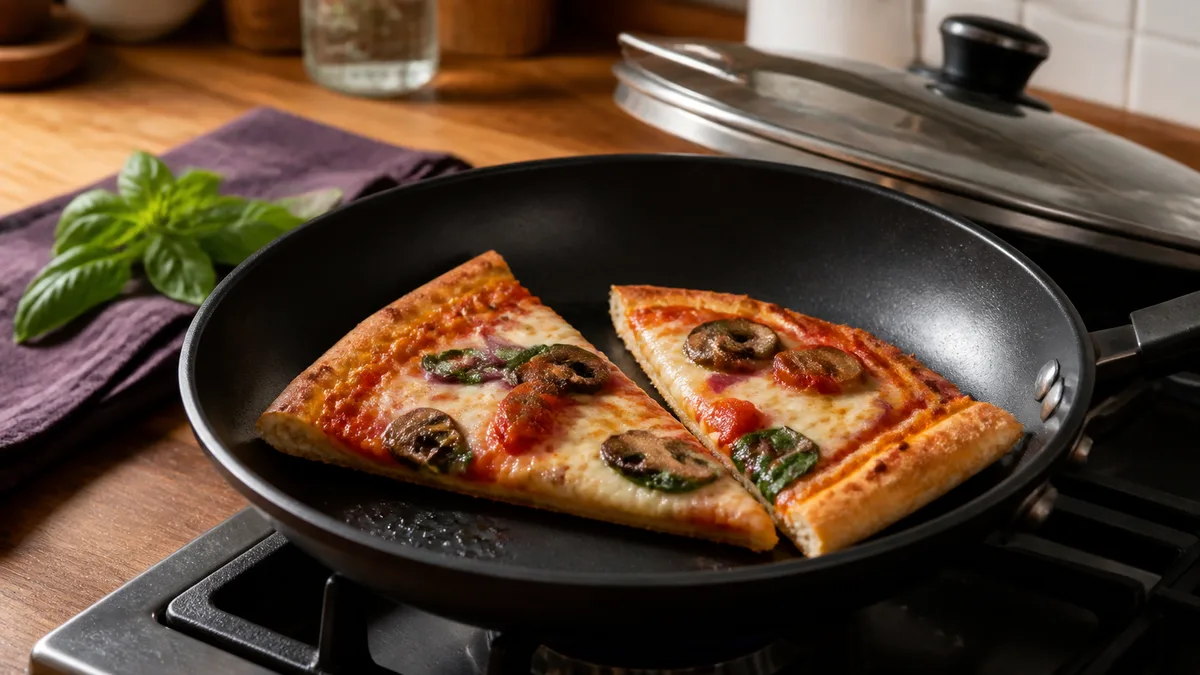
Cold pizza has its loyal fans, and fair enough. But when you want yesterday’s slice to feel like dinner again, the microwave can turn a crisp base into a soft, bendy disappointment. The oven works, but it is a lot of heat and waiting for one or two slices.
The easiest way to reheat pizza in a pan is to warm the base over low-to-medium heat, then add a tiny bit of steam under a lid so the cheese melts. You get a crisp underside, a warm centre and no reason to preheat the whole kitchen.
Why a frying pan works better than the microwave
A microwave heats the pizza quickly, but it also warms moisture in the crust. That is why the bottom can lose its bite before the cheese looks properly revived. A dry frying pan gives the crust direct heat instead.
The lid solves the other half of the problem. Pizza toppings and cheese need gentle trapped heat to warm through. A few drops of water beside the slice, not on the slice, create enough steam to do that without soaking the base.
| What you want | What helps |
|---|---|
| A crisp base | Direct contact with a dry, preheated pan |
| Melted cheese | A lid for a brief steamy finish |
| Warm toppings | Low-to-medium heat, not a blast of high heat |
| No greasy pizza | Skip extra oil unless the pan genuinely needs it |
Moody says: leftover pizza does not need a rescue mission. It needs a hot surface underneath and a little gentle heat above.
The five-minute skillet method
This works best for one to three slices, depending on the size of your pan. Use a nonstick or well-seasoned frying pan with a lid that fits reasonably well.
- Put the dry pan over low-to-medium heat for a minute. There is usually enough oil already in the pizza, so start without adding more.
- Add the slices in one layer and cover them. Let the crust warm for two to three minutes.
- Lift the lid and check the underside with a spatula. It should be warming and starting to feel firm, not burning.
- Add about a teaspoon of water to an empty part of the pan, away from the pizza. Cover immediately so the water steams the cheese and toppings.
- After 30 to 60 seconds, uncover and serve when the cheese is melted and the bottom feels crisp.
The exact time depends on how thick the slice is and how cold your fridge runs. Thin slices may need only a few minutes. A deep-pan slice needs more gentle time, so keep the heat lower and use the lid before the base gets too dark.
Should you use oil, butter or no fat at all?
Most takeaway or homemade pizza slices have enough fat in the base and cheese to reheat in a dry pan. That is the simplest place to start. If your pan tends to stick or the crust is especially dry, wipe in the smallest amount of oil with kitchen paper rather than pouring it in.
Butter can make the crust tasty, but it changes the method from reheating to shallow-frying. That is great if you deliberately want a buttery, almost grilled-cheese edge. It is less helpful when you only want the slice to taste like itself again.
The bigger decision is heat. High heat makes the bottom dark before the cheese has had time to soften. Low-to-medium heat may sound less exciting, but it gives the slice time to warm from crust to topping.
Three tweaks for different kinds of pizza
For thin, crisp pizza
Use a dry pan and keep the lid on for only the final minute. Thin pizza warms fast, and too much steam can soften the very crust you are trying to revive. If the cheese already looks melted, you may not need water at all.
For thick crust or lots of toppings
Start on low heat with the lid on. Once the slice is warm, add the teaspoon of water and cover again for a short burst of steam. The goal is to give the toppings time without scorching the base. If the cheese is still cool, use another short covered minute instead of turning the heat up sharply.
For a slice that has dried out in the fridge
The steam step matters most here. Keep the pan dry under the pizza, add a small splash of water to the side, then cover immediately. The water should disappear into steam, not pool under the crust. If the slice feels stale rather than just cold, it may still be better in a toastie, a wrap or a quick pizza scramble than forced back into its original form.
Turn leftover pizza into a real low-effort dinner
One slice can be dinner, especially if that is what sounds good. If it leaves you hungry again twenty minutes later, pair it with something that takes almost no work: a dressed handful of leaves, tomatoes with olive oil, a piece of fruit, or some warmed beans.
This is not a rule about making pizza virtuous. It is a way to make the leftovers work for the evening you actually have. A bag of leaves does not have to become a perfect salad, either. It can sit beside the pizza or be quickly wilted into eggs. Our guide to using bagged salad before it wilts has more useful routes for that last handful.
If you are reheating pizza because cooking feels impossible, you are still allowed to make the rest of dinner easy. A few cupboard ingredients can carry the next meal, too. Keep pantry staples for 15-minute weeknight dinners bookmarked for the evenings after the leftovers run out.
Keep the food-safety part simple
Put leftover pizza in the fridge promptly in a covered container rather than leaving the box out for the rest of the evening. When reheating, warm it until the centre and toppings are hot, not merely the crust. If you are unsure how long it has been sitting out or it smells unusual, the lower-stress choice is to leave it.
For general guidance on leftovers, see the USDA Food Safety and Inspection Service’s leftover-storage advice. Local guidance can differ, so follow it if it is more specific for where you live.
Common mistakes when reheating pizza in a pan
Pouring water over the slice
Water belongs in the empty space beside the pizza, never on top of it. You want steam trapped under the lid, not a wet topping or a soft base.
Using maximum heat from the start
The underside will colour before the cheese has caught up. Begin lower than you think, then give the slice another minute. The pan method is fast because it is controlled, not because it is aggressive.
Reheating too many slices at once
Crowding cools the pan and makes it hard for the bases to crisp. Reheat in batches if needed. The first slice can wait on a plate for a few minutes while the next one finishes, especially if you are serving everything together.
Questions about reheating pizza in a pan
Can I reheat pizza without a lid?
Yes, especially a thin slice with already-soft cheese. A lid makes it easier to warm thick toppings and melt cheese without overcooking the crust. If you have no lid, use a baking sheet or large plate with care, as long as it is heat-safe and does not trap your fingers.
How long does pizza take to reheat in a skillet?
Most slices take roughly three to five minutes over low-to-medium heat, plus a short covered steam at the end. Check the underside and the centre instead of relying on an exact timer, because slice thickness and pan heat vary.
Is an air fryer better than a frying pan for reheating pizza?
An air fryer can crisp pizza well if you already have it out. A frying pan is often simpler for one or two slices because it heats quickly, needs less setup and gives you direct control over the crust and cheese.
Reheating pizza in a pan is not a chef trick. It is a small dinner shortcut that makes leftovers feel intentional: crisp underneath, melted on top, and ready before you have time to talk yourself into ordering something else.
Need a dinner idea that matches your energy and the ingredients already in your kitchen? Explore MoodDish.