
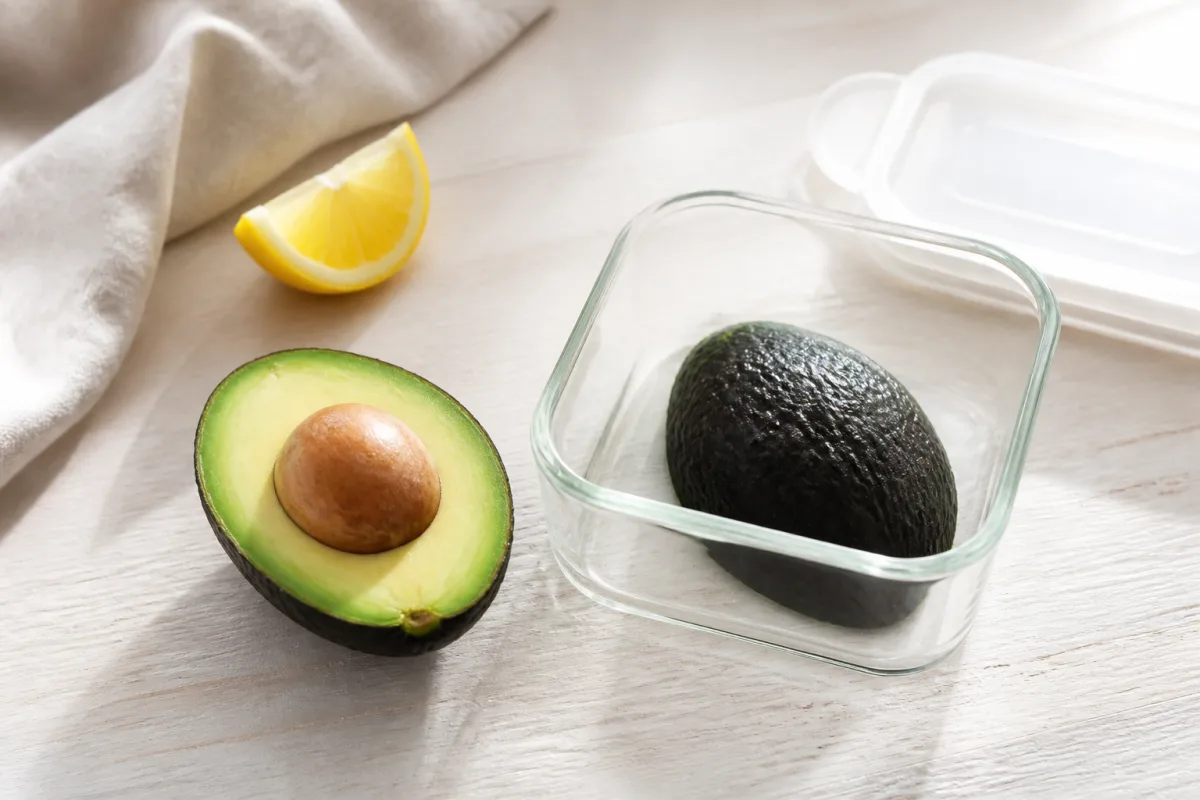
You use half an avocado for toast, then look at the other half and make a quiet promise to eat it tomorrow. Tomorrow arrives, the surface is brown, and suddenly that promise feels less appealing.
An avocado half browns because its flesh is exposed to air. You cannot stop that process forever with a dramatic kitchen trick, but you can slow it down enough to make tomorrow’s lunch much more likely. The useful routine is simple: protect the cut surface from air, cover it well, and get it into the fridge promptly.
The easiest method: cover the cut side closely
If you are saving half an avocado for the next day, leave the pit in if it is already there. It protects only the small area underneath it, but it also means less flesh is exposed. The part that matters most is the rest of the cut surface.
- Cut a piece of reusable wrap or parchment-lined wrap large enough to cover the exposed flesh.
- Press it directly against the avocado, smoothing out as much air as you can.
- Put the half in a clean, covered container and refrigerate it.
- Use it soon, ideally the next day while it still looks and tastes its best.
You can add a little lemon or lime juice before covering it if you enjoy the flavour. Acidic ingredients are commonly used with cut produce to help limit browning, as the USDA Food and Nutrition Service notes in its produce-preservation guidance. Lemon is helpful, but the close cover is doing the most dependable work here because it limits contact with air.
Moody says: do not save half an avocado as a vague fridge mystery. Give it a lid, a date in your head, and a job for tomorrow.
A small container can work even better than a big one
The best container is not necessarily the fanciest one. It is the smallest clean container that lets you cover the avocado without leaving a lot of empty air around it. Put the avocado cut-side down against a clean surface only if that surface is covered and the avocado will not be squashed. A shallow container with a snug lid is usually easier.
Avoid dropping the half into a large bowl and loosely covering the top. It may still be safe to eat, but the exposed flesh has plenty of air around it and is more likely to discolour. The goal is not to create a laboratory seal. It is simply to make the avocado easy to use before it becomes an unappetising back-of-the-fridge project.
If a little browning does appear the next day, taste and smell the avocado before you decide. A thin brown surface can often be scraped away if the rest is fresh-looking and smells normal. Extensive browning, an off smell, mould, or a slimy texture is a different story: do not try to rescue it.
Do you need lemon, onion or water?
There are lots of avocado-saving tricks online. Some are useful, some make a bigger mess than the avocado was worth. Here is a practical way to choose.
| Method | When it helps | The trade-off |
|---|---|---|
| Lemon or lime juice | You like a bright flavour in the next meal | It can change the taste slightly |
| Wrap pressed on the cut surface | Almost always | You need to press it closely, not just drape it over the top |
| Small covered container | Almost always | Use one that is clean and not much bigger than the avocado |
| Storing it with onion | Not necessary | The avocado can pick up an onion smell |
| Submerging in water | Not my first choice | It adds an extra handling step and can leave the surface watery |
The internet sometimes frames these as competing hacks. They do not need to be. Use lemon if it suits the dish, then cover the surface closely. That is enough for most everyday kitchens.
Keep food safety in the plan
Fresh avocado is easy to treat casually because it starts as a whole fruit, but once it is cut, it belongs in the fridge. FoodSafety.gov advises refrigerating peeled or cut produce, storing cold foods covered, and keeping the fridge at 40°F / 4°C or below in its food-waste and safety guidance.
That is why the countertop is not the place for a saved avocado half while you eat, clean up, watch something, and remember it later. Put it away after you have finished preparing the meal. If it has been sitting out for a long time, especially in a warm room, choosing a fresh avocado is the lower-stress call.
Wash your hands, knife and board before cutting, too. The avocado skin is not what you eat, but the knife travels through it to the flesh. A quick clean setup makes the storage step feel much less fussy.
Give the saved half a specific job
Half an avocado is most likely to go to waste when it has no destination. Before you put it away, pick one small next use. You do not need to plan a whole menu.
Tomorrow’s toast, but make it dinner-worthy
Mash the avocado with lemon, salt and pepper. Put it on toast, then add an egg, beans, tomatoes, feta or a handful of leaves. It is a real dinner when the toast has a filling partner, not just a snack you call a meal because the evening got away from you.
A finish for a warm bowl
Add slices to rice, beans, roasted vegetables or a microwave grain bowl after the hot part is ready. The cool, creamy avocado balances something spicy or tangy particularly well. If you need the bowl to start from ordinary groceries, these microwave dinners that feel like real meals offer a few flexible combinations.
A no-cook plate for a hot evening
Cut the avocado over chickpeas, tomatoes, cucumber and pita, or use it beside hummus and crunchy vegetables. It works well when you want something fresh without turning the stove on. Our no-cook dinners for hot nights can help turn that half avocado into a full plate instead of a garnish with no plan.
Buy and use avocados in a way that gives you options
If you often end up with several ripe avocados at once, buy them at different stages when you can. Choose one that is ready now and one or two firmer ones for later. Once an avocado gives slightly to gentle pressure, it is worth giving it a job soon rather than hoping it will wait indefinitely.
When a soft avocado has reached its last good moment, you do not have to turn it into a perfect toast photo. Mash it into a dressing with yogurt or olive oil, stir it into a bean bowl, or make a simple guacamole-style dip. The same anti-waste mindset applies to everything that looks a little too ripe: use it in a format that suits it. For a broader low-waste dinner approach, see what to cook with what is left in the fridge.
Questions about storing a cut avocado
Does keeping the pit in stop browning?
Only where it physically covers the flesh. It is fine to leave it in, but cover the rest of the cut surface closely as well.
Can I eat an avocado that is a little brown on top?
A small brown patch from air exposure is usually a quality issue. If the avocado otherwise looks fresh and smells normal, you can scrape the surface and use the rest. Discard it if there is mould, an unpleasant smell or a slimy texture.
How long does half an avocado keep in the fridge?
For the best texture and colour, treat it as a next-day ingredient. Keep it covered and refrigerated, then check it before using rather than saving it until it becomes another thing to negotiate with at dinner time.
A saved avocado half does not need a clever trick. It needs less air, a proper cover, a cold fridge and a plan that is small enough to happen. Tomorrow’s lunch will feel much easier when that green slice is already waiting for it.
Need an idea for the ingredients already in your kitchen? Explore MoodDish and start from the meal you actually feel like making.