
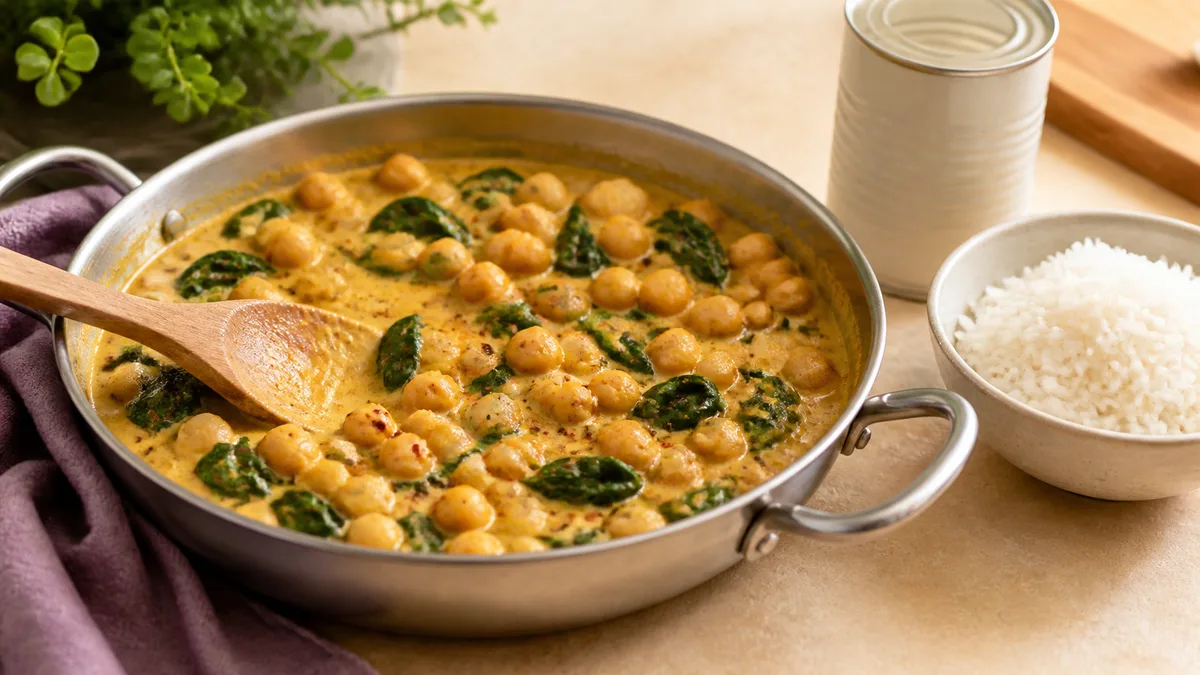
A can of coconut milk is easy to buy with good intentions and then ignore for months. It looks like it belongs to a very specific recipe, usually one you imagine making when life is somehow calmer. In reality, it is one of the most useful cupboard ingredients for a dinner that needs to feel warm, creamy and properly finished.
Knowing how to use coconut milk is not about making every meal taste the same. It is about using its richness as a shortcut. Pair it with something savoury, something bright and a filling base, and one can can turn chickpeas, vegetables, noodles or leftover chicken into an easy weeknight dinner.
First, check what is in the can
For cooking, choose canned coconut milk, not the chilled coconut drink sold for cereal or coffee. The canned version is much richer and is meant to become a sauce, soup or braise. It may separate in the can, with a thick layer on top and a thinner liquid underneath. That is normal.
Give the can a shake before opening if you can. If it has already separated, spoon the thick part and the liquid into the pan together, then stir as it warms. You do not need a perfectly smooth can before you start cooking.
| What you have | Best use | Small adjustment |
|---|---|---|
| Full-fat canned coconut milk | creamy pan sauces and curries | use it as the main sauce base |
| Light canned coconut milk | soup, braises and lighter sauces | simmer gently, as it is less rich |
| Coconut cream | a richer finish or dessert | loosen with water or stock for a dinner sauce |
| Carton coconut drink | smoothies or cereal | do not swap it into a curry expecting the same texture |
The label may describe the product as coconut milk, coconut cream or reduced-fat coconut milk. Follow the ingredients and your own taste rather than treating any one version as mandatory. A thinner can can still make a good dinner, especially when you add a little tomato paste, stock or starchy pasta water for body.
The four things coconut milk needs
Coconut milk is mellow and rich. On its own, it can make a pan taste flat. Give it a few companions and it becomes much more useful.
- A savoury base. Onion, garlic, ginger, curry paste, stock, soy sauce, miso or tomato paste give the sauce direction.
- Something that fills the plate. Chickpeas, beans, tofu, fish, chicken, lentils or eggs keep it from becoming just a creamy vegetable side.
- A vegetable. Spinach, frozen peas, cauliflower, green beans, peppers, mushrooms or squash all work. Pick what needs using, not the prettiest option.
- A bright finish. Lemon, lime, vinegar, herbs or a spoonful of yogurt make the final spoonful taste less heavy.
This is not a rule that every dinner needs to look like a curry. Coconut milk can make a tomato stew gentler, turn a tray of roasted vegetables into a sauce, or smooth out a spicy noodle broth. The useful idea is contrast: rich coconut milk needs salt and acidity around it.
Moody says: do not wait until you own every spice to open the can. Coconut milk, one savoury ingredient and a squeeze of something sharp can already make a real dinner.
A fifteen-minute coconut chickpea pan
This is a flexible route for a can of coconut milk, a tin of chickpeas and whatever greens you have. It is not tied to one cuisine or a rigid ingredient list.
- Warm a little oil in a wide pan. Cook a chopped onion, a spoonful of jarred garlic or a pinch of dried garlic until fragrant. If you have ginger, curry powder or chilli flakes, add a small amount now.
- Stir in a spoonful of tomato paste, curry paste or a splash of soy sauce. Let it meet the heat for a minute, rather than adding coconut milk immediately. This gives the pan a savoury foundation.
- Add a drained can of chickpeas and the coconut milk. If the sauce seems very thick, add a small splash of water or stock. Bring it only to a gentle simmer.
- Add a couple of handfuls of spinach, frozen peas or small cooked vegetables. Stir until the greens wilt or the vegetables are hot.
- Taste, then finish with lemon or lime, salt and pepper. Serve with rice, toast, flatbread or noodles.
The pan does not need to boil hard. A gentle simmer is enough to warm everything through and bring the flavours together. If you are using full-fat coconut milk, aggressive boiling can make the sauce look oily. Lower the heat and stir instead of trying to fix it with more ingredients.
If a can of chickpeas is already in your cupboard, our guide to making canned chickpeas taste good has more ways to give them a crisp or savoury role on another night.
Three more directions for the same can
Make a quick coconut tomato soup
Heat onion or garlic if you have it, then add canned tomatoes, a small amount of stock or water and coconut milk. Simmer until hot, then blend if you own a blender, or leave it chunky. Beans, lentils, frozen corn or leftover roasted vegetables can turn it into a fuller bowl.
Finish with lemon, chilli, black pepper or herbs. Toast makes it feel like dinner, particularly when the fridge is short on fresh options. If your shelves are doing most of the work this week, save our weeknight pantry dinner guide for more low-decision combinations.
Loosen a noodle bowl without buying a sauce
Cook noodles according to the packet. In a pan, warm coconut milk with a spoonful of peanut butter, soy sauce and lime or lemon. Add a splash of noodle water until it turns into a sauce that coats rather than sits heavily on the noodles. Toss in frozen vegetables, greens or leftover chicken.
Use what you genuinely like. Peanut butter is optional. A little curry paste, miso, hot sauce or grated ginger can take the sauce in a different direction. Start small with salty ingredients because both soy sauce and curry paste can be powerful.
Turn roasted vegetables into a saucy tray dinner
Roast cauliflower, broccoli, peppers, squash or whatever cooks well in your oven until nearly tender. Warm coconut milk separately with spices or a spoonful of tomato paste, then pour it over the vegetables for the last few minutes. Add chickpeas or beans if you want more staying power.
This is useful when you want the oven to do most of the work. A tray and one small pan are still less work than a complicated recipe, and the sauce gives plain vegetables a clear direction.
How to rescue a coconut-milk sauce
| If the sauce is… | Try this |
|---|---|
| Too rich | add lemon, lime or a small splash of vinegar, then taste again |
| Too thin | simmer gently uncovered, or add a spoonful of tomato paste, nut butter or starchy noodle water |
| Too thick | loosen it with water, stock or pasta water a little at a time |
| Too mild | add salt plus one decisive savoury flavour, such as soy sauce, curry paste or miso |
| Split or oily-looking | lower the heat and stir; avoid a hard boil |
The most common problem is trying to fix a bland sauce with more coconut milk. Usually it needs salt, acidity or a savoury ingredient instead. Add one thing, taste and stop once it feels balanced. A generous squeeze of citrus can do more than a drawer full of spices.
What to do with the rest of an opened can
If you do not need the whole can, move the leftovers to a clean covered container and refrigerate them promptly. Use them in a sauce, soup, porridge or smoothie soon, following the label and any local food-safety guidance. FoodSafety.gov’s cold-storage guidance is a useful general reference when you are unsure about leftovers. A small amount can also soften a tomato sauce or enrich a bowl of oats without turning breakfast into a project.
Freezing small portions is handy if you often use only half a can. Ice-cube trays work if you already have one, but a small freezer-safe container is just as good. Label it if your freezer is full of mysteries, then use it in a future soup or sauce rather than saving it for an imagined perfect recipe.
For a broader approach to keeping one-person meals interesting without collecting awkward leftovers, see cooking for one without boring leftovers. The goal is not to use every ingredient in one impressive meal. It is to give it a believable next job.
Questions about cooking with coconut milk
Do I need to cook coconut milk for a long time?
No. It needs enough time to heat through and mingle with the savoury ingredients, often just a few minutes at a gentle simmer. Long cooking is useful for some recipes, but it is not what makes a weeknight sauce taste complete.
Can I use coconut milk instead of cream?
Sometimes. It can make a soup, vegetable sauce or braise creamy, but it brings a distinct coconut flavour. It works best when that flavour makes sense with the rest of the dish, such as tomatoes, ginger, spices, greens, beans or lime. In a classic cream sauce, dairy or a neutral plant-based cream may be a closer match.
Why did my coconut milk separate?
Separation is common in the can and can become more visible with high heat. It does not automatically mean the dinner is ruined. Lower the heat, stir and add a small splash of water or stock if needed. A gentle simmer is usually kinder to the sauce than a rapid boil.
One can of coconut milk is not a niche ingredient waiting for a special occasion. It is a quiet solution for a weeknight when you have chickpeas, a vegetable and no interest in a long recipe. Start with something savoury, finish with something bright, and let the can make dinner feel more intentional.
When a few cupboard ingredients do not yet look like dinner, explore MoodDish for an idea that matches your energy and what you have.