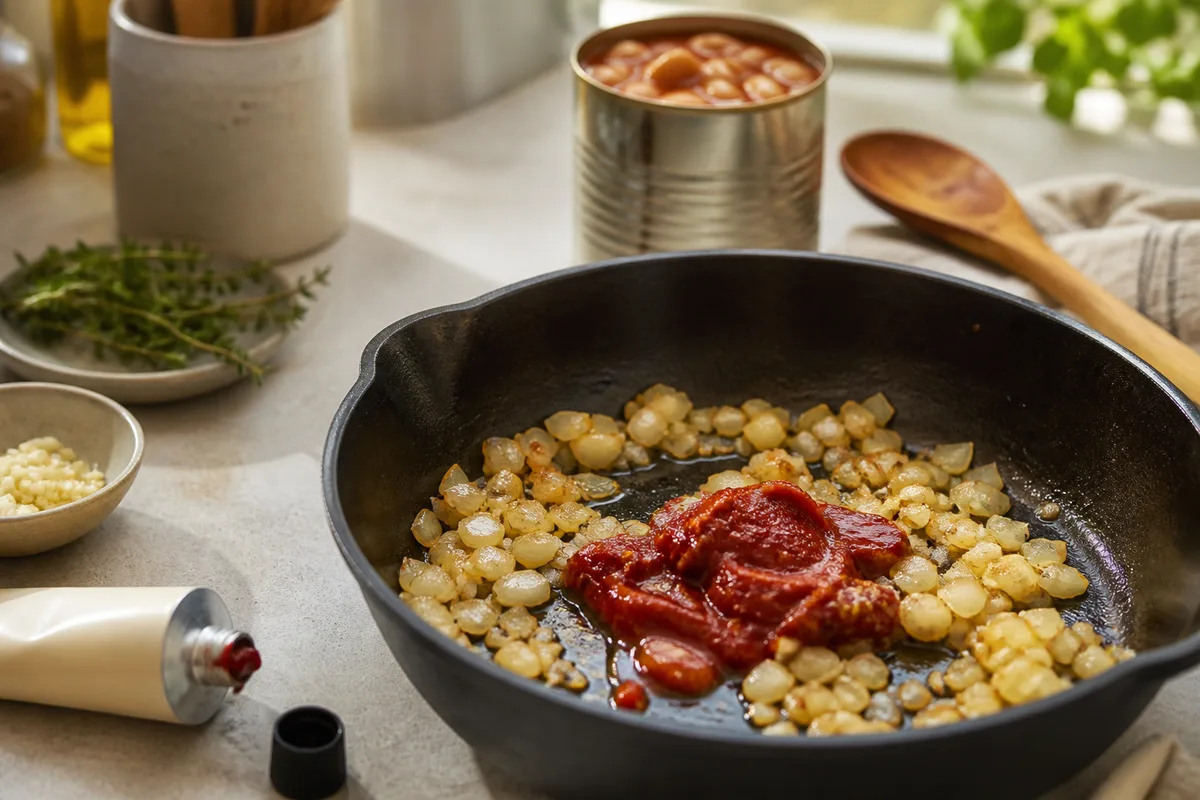
Tomato paste often ends up in the fridge door with a cap that is slightly sticky and no obvious future. You bought it for one spoonful, used that spoonful, then quietly stopped noticing it. That is a shame, because it is one of the quickest ways to make an ordinary cupboard dinner taste like it has a plan.
Knowing how to use tomato paste is less about following a specific sauce recipe and more about giving it a short moment in the pan before you add liquid. That little pause lets its sharp, raw edge soften and gives onions, beans, lentils, vegetables or leftover chicken a savoury base to build on. Add something salty, something bright and a filling ingredient, and a small spoonful can carry a whole dinner.
Start by cooking the paste, not diluting it immediately
Tomato paste is concentrated, so it needs a little room to open up. Warm a small amount of oil in a pan over medium heat. If you have onion, garlic, chilli flakes or a spice you like, let that soften first. Then add the tomato paste to a clear patch of the pan and stir it into the oil for roughly a minute.
You are looking for a deeper red colour, a more rounded smell and a paste that no longer looks wet and raw. Do not leave it alone until it burns, and do not worry if it catches very slightly at the edges. Once it smells rich rather than sharp, add a splash of water, stock, tinned tomatoes, coconut milk or pasta water, then stir well.
| If you have… | Use tomato paste with… | Finish with… |
|---|---|---|
| Beans or chickpeas | onion, garlic, water or chopped tomatoes | lemon, yogurt or feta |
| Lentils | curry powder, stock or water | herbs, lemon or a spoonful of yogurt |
| Pasta | garlic, pasta water and a little butter or olive oil | cheese, herbs or chilli |
| Soup | roasted or frozen vegetables and stock | vinegar, lemon or a swirl of yogurt |
| Leftover chicken | onions, beans or vegetables | a warm flatbread or rice |
The useful habit is not measuring a perfect amount. Start with a teaspoon or two for a dinner for one or two, then taste once the paste has met the rest of the pan. It is easier to add more than to rescue a sauce that tastes only of tomato concentrate.
Moody says: tomato paste is a supporting actor, not the entire meal. Let it give the pan depth, then add a base and a bright finish so dinner still tastes awake.
A quick tomato paste bean pan
This is a flexible route when you have a tin of beans and no interest in a long recipe. Use white beans, butter beans, chickpeas or black beans. The shape of the dinner matters more than choosing the exact tin.
- Warm oil in a wide pan and soften a little chopped onion, spring onion or garlic if you have it.
- Add one or two teaspoons of tomato paste and cook it in the oil until it darkens slightly and smells sweeter.
- Stir in drained beans, plus a small splash of water, stock or tinned tomatoes. Scrape the bottom of the pan so the paste dissolves into a loose sauce.
- Add spinach, frozen peas, chopped peppers or any quick-cooking vegetable that needs a job.
- Taste before salting. Finish with lemon, vinegar, yogurt, feta, herbs or chilli crisp, then eat with toast, rice, couscous or a grain pouch.
The goal is a sauce that clings to the beans, not a deep pot of soup. If it becomes dry before the vegetables are ready, add water a spoonful at a time. If it tastes flat, add one decisive thing: salt, lemon, a little soy sauce, mustard or chilli. Adding another spoonful of paste is not always the answer.
For a different way to make a tin feel like a meal, see how to make canned chickpeas taste good. That guide focuses on texture and flavour routes after the tin is opened, while this one gives the tomato paste a bigger role.
If your shelves are doing most of the work this week, pair the pan with the flexible ideas in our weeknight pantry dinner guide. The aim is the same: use a few reliable ingredients without needing a new shopping list.
Three other dinners that start with the same spoonful
Make a fast pasta sauce that tastes less like an emergency
Start the paste with garlic or chilli flakes, then loosen it with a ladle of pasta water. Add a little butter, olive oil, cream cheese or grated cheese if you have it, but none of those is compulsory. Toss the pasta directly into the pan so the sauce has a chance to coat it.
This is especially useful when you have almost no fresh ingredients. A handful of frozen peas, a tin of tuna, white beans or a fried egg can turn the pasta into dinner. If you want vegetables to do most of the work while the pasta water comes to the boil, our easy sheet pan dinners give you a practical framework. Fold the roasted vegetables into the tomato paste sauce at the end.
Turn a thin soup into a proper dinner
Cook the tomato paste with onion, garlic or a spice blend, then add stock or water and whatever vegetables you have. Frozen broccoli, peas, carrots, spinach, beans or lentils can all work. A spoonful of paste gives a clear savoury direction to a soup that might otherwise taste like hot vegetables in water.
Keep the soup simple. Add bread, rice or noodles if you need it to be more filling, then finish with lemon or vinegar. Tomato paste brings body, but acidity at the end keeps the bowl from tasting heavy.
Build a quick red base for a tray of vegetables
Roast vegetables that suit the time you have: broccoli, peppers, squash, aubergine or frozen cauliflower. Near the end, warm tomato paste with a little water or stock in a small pan, then add chickpeas or beans. Spoon the mixture over the hot vegetables, or use it as a base for a fried egg.
This is not a strict traybake recipe. It is a way to connect vegetables that are already roasting with a sauce that has a little more purpose. If you need help timing different ingredients, easy sheet pan dinners gives a practical framework without locking you into one shopping list.
Small fixes for tomato paste that goes wrong
It tastes harsh or metallic
It may need another short moment in the pan before you add the liquid. Lower the heat if it is catching too fast, stir, then add a splash of water. A little fat, such as olive oil or yogurt added at the end, can make the sauce feel rounder too.
It tastes too intense
Tomato paste is concentrated by design. Dilute it with water, stock, tinned tomatoes, coconut milk or pasta water, then add a filling ingredient. Beans and lentils are particularly good at spreading that intensity across a full meal.
The tube is about to be forgotten again
Put a small note on your meal plan, or decide on one easy job for it: bean pan, pasta sauce or soup. You can also freeze little portions if that genuinely suits your routine. The best preservation method is still a believable next dinner.
Questions about using tomato paste
Can I use tomato paste straight from the tube?
Yes. It is safe to add to a sauce straight away, but it usually tastes more rounded when it spends a brief moment in warm oil with your aromatics first. If you are stirring it into an already simmering soup, give it a few minutes to cook through before deciding it needs more seasoning.
What can I use if I do not have stock?
Water is completely fine. Tomato paste, onion, garlic, herbs, spices and a small salty ingredient can make water taste like a useful sauce base. Add it gradually and taste, rather than assuming stock is the only route to flavour.
Is tomato paste the same as tomato purée?
Names vary by country and brand. Check the label and consistency. A very thick, concentrated product needs less and benefits from being loosened with liquid. A thinner tomato purée can still work, but you may need more of it and a little longer for the sauce to reduce.
Tomato paste earns its place in the fridge when it solves a dinner, not when it waits for a specific recipe to return. Give it a minute in the pan, add the food you already have and finish with something bright. That is enough to make a cupboard meal feel deliberate.
When a few pantry ingredients still do not look like dinner, explore MoodDish for an idea that starts with the energy and ingredients you actually have.