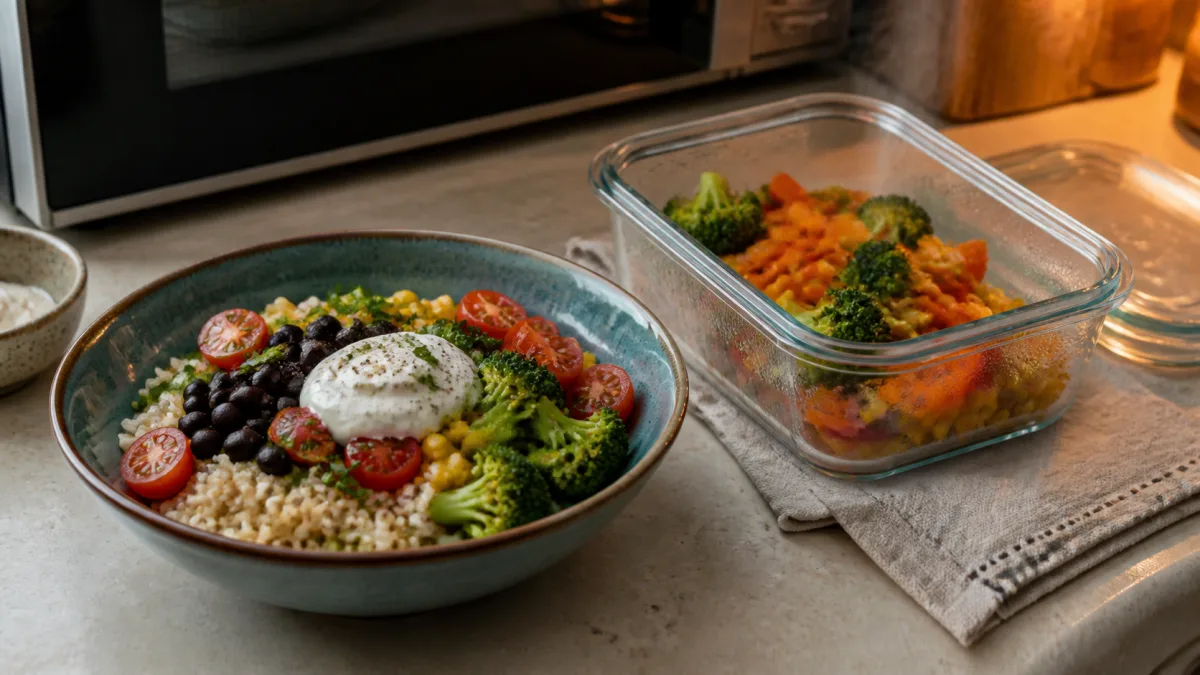
A microwave dinner does not have to mean eating straight from a packet while standing at the counter. It can be a warm bowl, a proper plate and the tiny relief of knowing dinner is handled. The trick is not finding one perfect microwave recipe. It is learning a few combinations that give you a carb, something filling, a vegetable and a finish you actually want to eat.
These microwave dinners use normal groceries and flexible amounts. Follow the instructions on packaged or frozen foods, especially for cooking times and standing time. When reheating leftovers, stir halfway through if you can, then make sure the food is steaming hot throughout. The Food Standards Agency’s guidance on reheating food explains why stirring and standing matter: microwave heat can leave cold pockets in the middle.
Start with a dinner formula, not a sad list of ingredients
Most satisfying microwave meals have four parts. You do not need all four in equal quantities, but you do need enough contrast to make the bowl feel intentional.
| Part | Easy options | What it does |
|---|---|---|
| Base | microwave rice, potato, couscous, noodles | makes the meal feel complete |
| Filling | beans, lentils, cooked chicken, tofu, eggs | gives the dinner some staying power |
| Vegetable | frozen veg, spinach, tomatoes, bagged salad | adds colour and freshness |
| Finish | yogurt, cheese, pesto, lemon, hot sauce | stops everything tasting flat |
Pick one thing from each column, then adjust for the night you are having. A can of beans and a packet of rice do not look exciting separately. Add frozen corn, salsa and yogurt, and they become a bowl you would gladly eat with a fork.
If your cupboard is the obstacle rather than your appliance, start with our guide to pantry staples for 15-minute weeknight dinners. The goal is fewer decisions, not a kitchen full of specialist products.
1. The rice bowl for an almost-empty fridge
Put a pouch of rice, frozen vegetables and drained beans in a microwave-safe bowl. Heat according to the package directions, stirring where the instructions allow. Add a splash of water if the vegetables look dry, then cover loosely with a microwave-safe lid or plate if appropriate for the bowl and food.
Finish with whatever gives you contrast: salsa and yogurt, soy sauce and sesame seeds, pesto and lemon, or cheese and hot sauce. A handful of leaves can go on cold at the end if you have them. The bowl does not need a name or a strict cuisine. It needs a base, a filling and a flavour that makes the next bite appealing.
For a single-person dinner, this formula is especially useful because it lets you use part of a can and turn the rest into tomorrow’s lunch. Our tips for cooking for one without boring leftovers can help you keep that second portion from feeling like a repeat.
2. The loaded potato that needs no oven
Scrub a potato, prick it several times with a fork and place it in a microwave-safe dish. Microwave cooking times vary greatly by potato size and appliance power, so use your microwave guidance and turn it if needed. Let it stand briefly before opening, because the inside will be very hot.
Split the cooked potato and add a filling that is already safe to eat or properly heated: beans with salsa, leftover chilli, tuna and sweetcorn, cottage cheese, or cooked vegetables with grated cheese. A spoonful of yogurt or a squeeze of lemon adds the bit of brightness that makes it feel less like an emergency.
This is a good dinner for a tired evening because it asks for only one thing to be cooked from scratch. Everything else can be cold, canned, or reheated. If potatoes are not your thing, use a microwavable grain pouch and keep the same topping logic.
Moody says: a useful shortcut is not a dinner you apologise for. It is a dinner that leaves you fed and with one fewer decision to make.
3. The soup-plus-something bowl
Heat a ready-made soup or a homemade leftover in a microwave-safe bowl, following its instructions and stirring so it heats evenly. Then give it a partner. Add beans or lentils to tomato soup, stir spinach into vegetable soup, or top a smooth soup with grated cheese, yogurt, toasted seeds or crushed crackers.
The partner matters because soup alone can sometimes feel like a prelude to dinner. Add a buttered toast, a cheese quesadilla, a microwaved potato or a bowl of rice, and it becomes dinner itself. You are not trying to turn soup into a restaurant course. You are making it filling enough to prevent a second round of random snacking an hour later.
On nights when even opening a can feels like admin, choose one of the low-effort ideas in recipes for tired evenings. A simple hot meal beats waiting for the motivation to arrive.
4. The muggy weather grain-and-greens plate
This one uses the microwave for just the warm part. Heat rice, quinoa, lentils or leftovers as directed. While they heat, put greens, cucumber, tomatoes or bagged salad into a bowl. Add the hot base, then finish with a cold element such as hummus, feta, yogurt or avocado.
The temperature contrast is the point. You get something warm enough to be comforting, plus crisp food that does not need another pan. If an open bag of leaves is waiting in your fridge, our article on using bagged salad before it wilts offers several ways to give it a proper job.
This formula also works when the weather is warm and turning on a hob feels unreasonable. For a fully cold option, see our no-cook dinners for hot nights.
5. The leftovers reset, not leftovers again
Leftover rice, pasta, roasted vegetables or cooked beans can feel boring when you heat them in the same container and call it a plan. Reset the structure instead. Put the leftovers in a wide microwave-safe bowl, add a spoonful of water or sauce if they are dry, cover loosely and heat in smaller portions if that helps them warm more evenly.
Then add one new element after heating: a fried egg if you have a pan, cheese, lemony yogurt, fresh herbs, a handful of salad or a crunchy topping. Even a different sauce changes the direction. Leftover tomato pasta plus beans and spinach becomes a bowl. Roasted vegetables plus rice and hummus become a plate.
For food safety, cool and refrigerate leftovers promptly, then reheat them until steaming hot throughout. Do not keep reheating the same portion. The Food Standards Agency advises reheating leftovers only once, so serve the amount you expect to eat and keep the rest chilled for another use.
Three microwave habits that make dinner better
Use the right dish and cover sensibly
Choose a microwave-safe glass or ceramic dish, and leave room for food to bubble. A loose cover helps contain splatters and steam, but do not seal a container unless its instructions say it is designed for microwave use. Let steam escape carefully when you uncover it.
Stir, check, then let food stand when directed
Microwaves heat unevenly. Stirring moves colder parts toward the hotter edges. Standing time is not wasted time, it lets the heat settle through the food. Packaged meals give specific directions for a reason, so follow them rather than treating the timer as a universal rule.
Build flavour after heating
Lemon, herbs, hot sauce, yogurt, grated cheese and crunchy toppings are easiest to control once the hot part is done. This is also how one basic bowl can suit a different mood each time: bright and fresh, cozy and cheesy, or spicy and lively.
Questions about microwave dinners
Can a microwave dinner be balanced?
Yes. Start with a base, add a filling protein or legume, include a vegetable and finish with something flavourful. The microwave is just the heat source. It does not decide whether a meal is satisfying.
How do I stop microwave food from drying out?
Use a microwave-safe cover where appropriate, add a small splash of water or sauce to foods that have dried out, and avoid heating a large portion for too long in one go. Follow package directions for frozen and prepared food.
What should I do if the middle is cold?
Stir or turn the food, return it to the microwave, and heat again until it is hot throughout. Let it stand for the time stated on the package. For leftovers, aim for steaming hot throughout rather than merely warm.
Microwave dinners are not a separate category of food. They are ordinary ingredients assembled with less friction. Once you have two or three reliable formulas, the microwave becomes a way to eat a real dinner on the nights when the stove is simply not happening.
When your energy and your ingredients are all over the place, try MoodDish for a dinner idea that starts where you actually are.