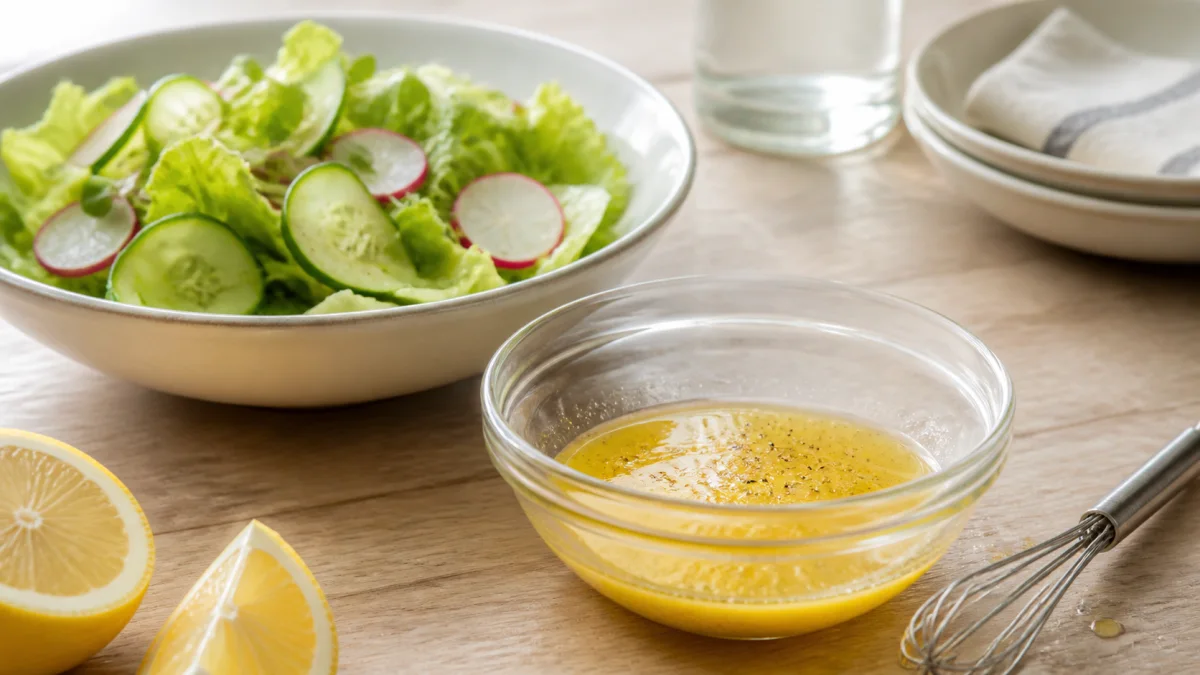
You have leaves, cucumber, maybe a tomato, and the vague idea of a salad. Then the dressing question turns a five-minute dinner into a cupboard-staring exercise. A bottle works, of course, but making your own does not need a recipe, a blender or a collection of niche ingredients.
A simple salad dressing starts with three jobs: oil for body, something acidic for brightness, and salt to make the ingredients taste like themselves. Add one extra only if it sounds good. Once you know that shape, you can make a dressing in the bottom of the serving bowl and build dinner straight on top of it.
The small formula worth remembering
Start with about three parts oil to one part acid. For one generous bowl of salad, that can be three tablespoons of olive oil and one tablespoon of lemon juice or vinegar. Add a pinch of salt and a few turns of black pepper, then stir or shake it until it looks combined.
This is a starting point, not a test. Some lemons are sharp, some vinegars are sweet, and some oils have a stronger flavour than others. Taste a drop with a piece of lettuce, then adjust it. Too sharp? Add a little more oil. Flat? Add a small pinch of salt or another drop of acid.
| Part | Everyday options | What it contributes |
|---|---|---|
| Oil | olive oil, rapeseed oil, avocado oil | body and a smoother mouthfeel |
| Acid | lemon juice, red wine vinegar, cider vinegar | brightness and contrast |
| Seasoning | salt, black pepper | brings the flavours into focus |
| Optional extra | mustard, honey, garlic, herbs, chilli flakes | character, when you want it |
If your bottle of oil is all you have, use it. If lemon is the only acidic thing in the fridge, use that. The point is not to reproduce a restaurant vinaigrette. It is to make the salad in front of you more appealing than another round of dry leaves.
Make it directly in the salad bowl
This is the lowest-washing-up version. Put the dressing ingredients in a large dry bowl first, then whisk with a fork. Add the sturdier vegetables, such as cucumber, carrot, peppers or beans, and toss them in the dressing. Add delicate leaves last and toss just before eating.
That order matters because dressed leaves soften quickly, while sliced vegetables benefit from a minute in the seasoning. It also means you can stop halfway through if the salad is becoming more food than you actually want tonight.
For a bag of leaves that is nearing its last good day, this method gives it a real job. Our guide to using bagged salad before it wilts has more ways to turn that open bag into dinner instead of fridge decoration.
Moody says: make the dressing before you decide the salad is boring. A salty, tangy bite is often the difference between “I should eat this” and “I actually want another forkful.”
Four variations from the same base
You do not need four separate recipes. Start with oil, acid, salt and pepper, then use one of these directions when it matches the food you have.
Lemon and mustard for a crunchy dinner salad
Whisk a small spoonful of mustard into lemon juice before adding the oil. Mustard helps the mixture hold together for a little longer and gives it a savoury edge. This works with cucumber, grated carrot, chickpeas, white beans, tuna or a boiled egg.
Add bread, pita or crackers if you want the salad to feel like dinner rather than a side dish. The same build-a-plate idea appears in our no-cook dinners for hot nights, where a filling base and a protein keep the meal from feeling unfinished.
Cider vinegar and honey for apple or carrot
Use cider vinegar, then add a tiny amount of honey if the salad has something crisp or sweet, such as apple, carrot or roasted squash. The honey should soften the edge, not turn the dressing into a glaze. Begin with less than you think you need, taste, then decide.
This version is a useful answer to a fridge with one lonely apple and half a bag of carrots. Add nuts or seeds if you have them, but do not delay dinner because you do not.
Red wine vinegar and herbs for beans or tomatoes
Red wine vinegar, olive oil, salt and dried oregano make a strong, simple dressing for tomatoes, white beans, chickpeas and feta. Fresh herbs are lovely when they are there, but dried herbs still bring a recognisable direction to the bowl.
If your herbs are fresh but looking tired, use them early rather than saving them for an imaginary perfect meal. A handful in this dressing is already a good use for the rest of the bunch.
Yogurt and lemon when you want something creamy
Stir plain yogurt with lemon, a small drizzle of oil, salt and pepper. Add a splash of water if you want it looser. This is not a classic vinaigrette, but it is an easy dressing for crunchy vegetables, roasted vegetables or a grain bowl.
It is especially useful beside tray-baked food because the cool, tangy dressing can make a simple warm dinner feel more complete. If you need a low-effort main to go with it, try one of these easy sheet-pan dinners.
The most common dressing problems
It separates immediately
Oil and vinegar naturally separate, and that is not a failure. Stir it again just before using. A little mustard can help the mixture stay combined for longer, but you do not need it for a good dressing.
It tastes harsh
The acid may be too strong for the amount of oil, or the dressing may need a pinch of salt. Add oil a little at a time, taste with a leaf, then adjust. Adding lots of honey is not the only answer, and it can pull the flavour in a direction you did not want.
The salad goes watery
Salt draws moisture from vegetables, especially tomatoes and cucumber. Dress those close to serving time, and keep any leftovers undressed when possible. If you are packing lunch, put the dressing in a small separate container and add it when you are ready to eat.
It does not feel like dinner
The problem may not be the dressing at all. Add one filling component: beans, lentils, eggs, cheese, chicken, tofu, tinned fish or leftover grains. Then add something with substance to scoop or chew, such as bread, potatoes, rice or crackers. A good dressing gives those ingredients a reason to belong together.
Keep the ingredients flexible, not precious
There is no universal “best” salad oil or vinegar. Use the one whose flavour you like and whose bottle is already open. A delicate oil might suit lemon and soft leaves; a bolder olive oil can stand up to beans and tomatoes. If a vinegar seems aggressively sharp, use less of it and let the oil do more of the work.
Fresh garlic is delicious, but it can overpower a small bowl quickly. Start with a very small amount, or skip it on a weeknight when you want dinner to be easy. The same goes for every optional ingredient. A dressing with three things that you enjoy is more useful than a complicated one you make once.
MoodDish is built for that kind of flexibility. Choose what sounds good, notice what you already have, and let the meal change with the evening instead of trying to force a rigid plan. A lemon dressing with chickpeas might be right today. Tomorrow, yogurt and herbs might be better.
Questions about simple salad dressing
What is the easiest oil-and-vinegar ratio?
Three parts oil to one part acid is a dependable place to begin. Taste it with the food you are serving, then adjust because the sharpness of vinegars and lemons varies.
Can I make salad dressing without olive oil?
Yes. Rapeseed, avocado or another mild cooking oil can work. Choose an oil you like uncooked, then pair it with lemon or vinegar and season it well.
How far ahead can I dress a salad?
For crisp leaves, dress just before eating. Sturdier ingredients such as beans, carrot, cabbage or cooked grains can sit in dressing longer. Keep dressed leftovers refrigerated and judge their texture before planning to serve them again.
A homemade dressing is not another kitchen skill to master. It is one tiny formula that makes vegetables, leftovers and pantry ingredients easier to turn into a dinner you will actually enjoy.
Need a dinner idea that starts with your energy and the ingredients already on hand? Explore MoodDish.