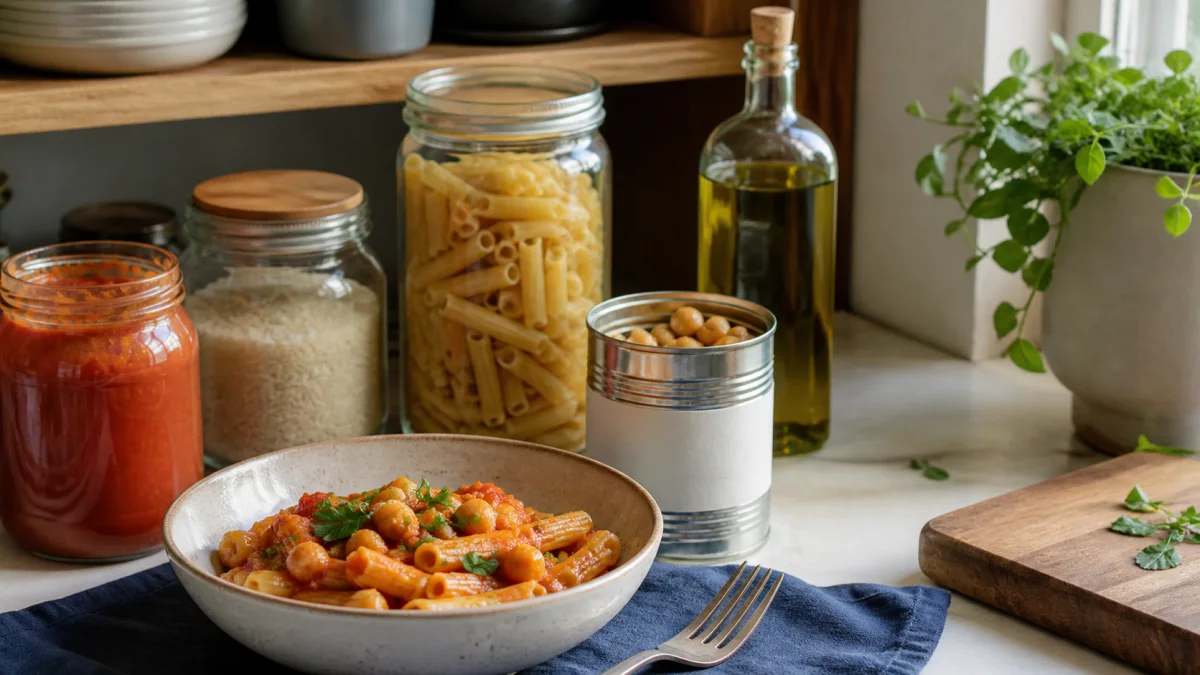
The most useful pantry is not the one with twenty specialty jars. It is the one that lets you make dinner when the fridge looks thin and your energy is lower than your standards for dinner.
A 15-minute pantry is a small set of shelf-stable ingredients that can become several different meals. It does not replace fresh food. It stops an ordinary weeknight from becoming the same question at 7 p.m.: “Do I really have to shop, order in, or eat toast?”
The USDA’s MyPlate family-meal handout also suggests keeping pantry foods around to make quick meals. The point is not to stockpile. It is to keep a few useful starting points on hand.
Start with five roles, not a shopping list
Choose one or two ingredients from each role. Pick what you actually like eating, then build from there.
| Pantry role | Easy choices | Fast dinner it can start |
|---|---|---|
| Carbohydrate | pasta, rice, noodles, couscous | a bowl, a skillet meal, soup with bread |
| Protein | canned chickpeas, beans, lentils, tuna | tomatoey beans, pasta, grain bowl |
| Sauce shortcut | jarred tomato sauce, pesto, curry paste | dinner with less chopping |
| Big flavour | soy sauce, miso, chilli crisp, parmesan | a plain base that tastes intentional |
| Backup vegetable | tinned tomatoes, roasted peppers, frozen peas | colour and substance when fresh produce is gone |
You do not need every option. Pasta, chickpeas, tomatoes, olive oil and one flavour shortcut are enough for a genuinely useful first version. If you live alone, that is especially important: an enormous pantry is not a plan if it creates ingredients you never finish. Cooking for one without boring leftovers has a good way to give every extra ingredient another job.
Make the staples work in combinations
Individual ingredients are not meals. Give yourself a few pairings before you need them. Think of these as routes, not recipes you must follow exactly.
Pasta night: sauce + protein + something green
Cook pasta. Warm tomato sauce or pesto. Add chickpeas, tuna, white beans or lentils. If you have spinach, peas or a handful of frozen vegetables, stir them in at the end.
This is the kind of dinner that takes 15 minutes because each part already knows its role. The only real decision is what you want on top: cheese, lemon, herbs or pepper.
Rice bowl: grain + savoury topping + crunch
Use rice, couscous or quick noodles. Add beans or an egg if you have one, then season with soy sauce, chilli oil or a spoonful of pesto. Finish with anything fresh or crunchy: cucumber, carrots, seeds, peanuts, pickles or even just black pepper.
The bowl does not need to follow a specific cuisine to be good. What matters is a warm base, a protein, a strong flavour and one contrasting texture.
Tomatoey pan: beans + tomatoes + bread
Warm canned tomatoes with garlic, dried herbs or chilli flakes. Add chickpeas or beans. Let it simmer while you toast bread. A little cheese, yogurt or olive oil at the end makes it feel like dinner rather than an emergency.
This is a useful answer for the night when you have food but no plan. It follows the same practical logic as what to cook with what is left in the fridge: find a base, add protein, then give it a finish.
The two rules that keep a pantry from becoming clutter
Buy ingredients with at least two jobs
Before adding a staple to your trolley, name two dinners it could make.
- Chickpeas: curry tonight, crispy topping for a salad or soup later.
- Tomato sauce: pasta, then a quick shakshuka-style pan with eggs.
- Rice: a warm bowl, then fried rice with leftovers.
- Pesto: pasta, then a spread for a wrap or sandwich.
If you cannot name a second use, it may still be delicious, but it is probably not a weekday staple for you. Keep special ingredients for the meal you are excited to make, not for the imaginary version of yourself who has time every Tuesday.
Refill only what you finish
Pantry food still needs attention. Once a month, pull forward the half-used bags and jars. Plan one dinner around them before buying more. This is not strict meal prep. It is a five-minute reset that protects you from finding three open bags of rice and no dinner idea.
If grocery shopping is where the system falls apart, make your list from the meals you might actually cook, not from a generic “healthy staples” checklist. MoodDish can help at that step: start with your mood or the ingredients you have, then add only the missing pieces to the list.
Moody says: a backup dinner is not settling. It is the meal that keeps hungry, tired you from having to make six decisions at once.
Keep one fresh, one frozen and one shelf-stable option
The pantry works best with a little help from the fridge and freezer. You do not need a perfect produce drawer. Keep one flexible option in each place:
- Fresh: onions, lemons, spinach, eggs or a hard cheese.
- Frozen: peas, spinach, mixed vegetables or a frozen soup.
- Shelf-stable: pasta, beans, tomatoes, rice or noodles.
That gives you a fallback even when one part of the kitchen is empty. Fresh ingredients give lift, frozen vegetables add ease, and shelf-stable food gives you a base. Rotate them according to what you use, not according to someone else’s ideal kitchen.
A five-minute reset for tomorrow’s dinner
Before you clear the plates, do one tiny favour for tomorrow:
- Put the nearly empty pasta or rice on your shopping list.
- Move one can or jar you want to use next to the front of the shelf.
- Freeze one leftover portion if you will not want it in the next few days.
- Write down one dinner combination that worked.
That last note matters. Your best weekday pantry is built from meals you actually made when you were tired, not from recipes you saved and never cooked. For more low-energy options, keep fast, hot, comforting tired-evening recipes nearby.
Questions about building a weeknight pantry
Do I need to buy everything at once?
No. Start with one carbohydrate, one canned protein, one sauce and one vegetable backup. Add a new staple only when you know how you will use it. A small pantry you trust is better than a full cupboard you avoid.
What if I do not like canned food?
Use dried lentils that cook quickly, shelf-stable gnocchi, jarred sauces, noodles, or a freezer backup instead. The system is about reducing decisions, not forcing a particular ingredient.
Is this meal prep?
Not really. Meal prep usually means cooking some components ahead. A weeknight pantry simply makes it easier to cook when the moment arrives. You can combine both, or use whichever one fits the week you have.
Your pantry should make dinner feel more possible, not more controlled. Keep the ingredients that save your own evenings, give them more than one job, and let the rest of the shelf stay empty.
Need an idea that matches your energy and your ingredients? Explore MoodDish.